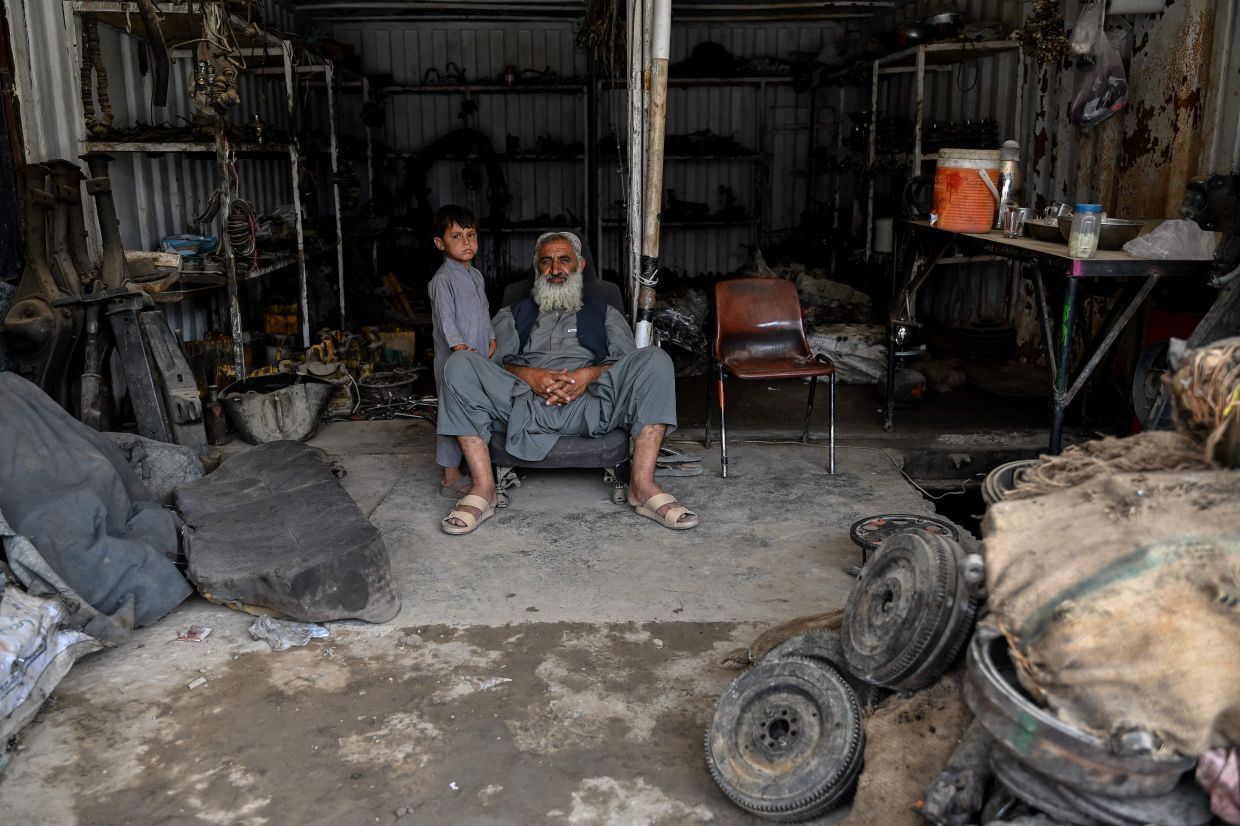
The automotive trade that once animated the sprawling markets of Spin Boldak in Afghanistan's Kandahar province has effectively ceased, victim to a cascading series of regional crises that have systematically severed the country from global supply chains. What was once a reliable pipeline delivering vehicle components from Japan, the UAE, and elsewhere to Afghanistan's southern trading hub now stands nearly empty, with international shipping routes disrupted and border crossings closed or severely restricted. The collapse of this single sector reveals the fragile interdependence upon which Afghanistan's already fragile economy depends, and signals deeper vulnerabilities for a nation struggling to rebuild after decades of conflict.
The first blow came in October when escalating cross-border tensions between Afghanistan and Pakistan prompted authorities to nearly seal the frontier entirely. This closure targeted one of the most direct overland routes through which Japanese car parts and components had historically flowed into Spin Boldak. Desperate to keep business alive, merchants including Abdul Baqi Bina, deputy head of the Kandahar Chamber of Commerce and Investment, scrambled to find alternative pathways. They pivoted toward routing shipments through Iran's Bandar Abbas port, a workaround that involved significant additional costs, complications, and delays but at least maintained some semblance of continuity. For several months, this inefficient detour sustained the sector at a reduced capacity.
The February outbreak of conflict in the Middle East introduced a far more intractable problem that proved impossible to circumvent through simple rerouting. The violence and regional tensions triggered widespread disruption across international maritime traffic through the Strait of Hormuz, one of the world's most critical chokepoints for global commerce. Shipping companies warned that normalising operations through this vital waterway would require months of careful coordination and security improvements. For traders in Spin Boldak dependent on container shipments arriving via the UAE and other Gulf transit points, this disruption represented an existential crisis. The alternative routes that had salvaged their business during the Pakistan border closure now faced their own paralysis.
The economic impact cascaded immediately through the supply chain. Container shipping costs, which had stabilised at approximately US$2,000 per unit, suddenly skyrocketed to US$8,000 as shipping companies factored in extended voyage times, heightened insurance premiums, and port congestion. This eightfold increase in logistics costs rendered many shipments economically unviable, pushing traders to abandon or postpone orders. One importer operating from Spin Boldak reported that over thirty containers destined from Japan and the UAE now remain stranded, unable to move forward due to bottlenecks at Dubai's Jebel Ali port, a major logistics hub serving the entire region. Each day of delay accumulates storage charges and forces difficult decisions about whether shipments will ever reach their intended market.
The human consequences have become starkly visible across Spin Boldak's workshops and showrooms. Traders who once received dozens or even hundreds of containers monthly now receive none. One parts importer named Masoud, who handles Japanese vehicle components, described the shift from routine operations to complete paralysis. The financial mathematics have become unsustainable: he has begun shipping containers back to Japan to avoid escalating storage fees, a decision he describes as accepting total loss. The alternative of holding inventory in the UAE while hoping for eventual market recovery would bleed resources indefinitely. Such traders must choose between two forms of ruin: immediate losses from returning stock, or prolonged losses from warehouse costs.
The broader economic context makes this disruption particularly damaging for Afghanistan. The World Bank noted in May that Afghanistan faces exceptional vulnerability to external shocks, describing the nation as experiencing a widening gap between imports and exports that reached 70 per cent of GDP during the 2025 fiscal year. A collapsing automotive sector directly worsens this imbalance. The car parts trade and associated assembly operations represented one of the few manufacturing activities generating employment and economic activity in Kandahar province, a region with limited industrial development. Its near-total cessation removes a significant source of income for thousands of workers and contributes to further deterioration in the import-export ratio.
Workshop owners face mounting pressures that combine lost revenue with fixed costs. Samiullah, who operates a vehicle assembly workshop, explained that his operation previously produced five to seven complete vehicles weekly. Now, facing a complete absence of arriving parts, his workforce remains idle while he must continue paying salaries. The mathematics are remorseless: ongoing expenses without incoming revenue leads inexorably toward insolvency. Many workshop owners lack capital reserves to sustain operations through extended disruptions. Young workers like Mohammad Naeem, a 21-year-old crane operator, now confront unemployment and the necessity to abandon the automotive sector entirely for whatever alternative work exists in an economy with few options.
Retail operations serving the final customer have equally stalled. Noor Ali, who operates a vehicle showroom at Spin Boldak market, reported that customer demand has evaporated alongside the disappearance of new inventory. A month had passed since his last vehicle sale. His showroom displays colorful assembled cars built from previously imported Japanese components, but these inventory items represent capital locked in unsold stock rather than flowing inventory. The absence of new parts reaching the market signals to potential customers that their future purchasing power cannot translate into vehicle availability, so demand itself contracts even for vehicles that remain in stock.
The disruptions reveal how thoroughly Afghanistan's economy has become integrated into global supply chains even in sectors like automotive assembly that appear locally based. Vehicle parts cannot be sourced domestically; Japan and the UAE remain irreplaceable suppliers. Alternative transport routes exist only within narrow parameters dictated by geography and geopolitics. Pakistan's closure removes the shortest path. Iran offers an option but one subject to its own political volatility and sanctions regimes. The Gulf route through the UAE presents the most reliable alternative but depends upon stability in the Middle East and navigability of the Strait of Hormuz. When multiple routes simultaneously face disruption, no viable alternatives remain.
The recovery timeline appears uncertain at best. Shipping companies have provided no specific timeframe for normalising Strait of Hormuz operations. Pakistan's border closure reflects ongoing tensions that show no immediate signs of resolution. Afghanistan's government lacks leverage to influence any of these external factors. Traders and workers can only wait, accumulating losses and watching their livelihoods evaporate. The World Bank's assessment of Afghanistan as highly exposed to external shocks appears vindicated by Spin Boldak's experience: the country's limited economic diversification and dependence on imported materials leave it defenseless against disruptions originating far beyond its borders.
For the thousands of people employed across Spin Boldak's automotive sector, the immediate future looks bleak. Workers face unemployment without clear alternatives. Traders contemplate bankruptcy or permanent downsizing. Workshop owners must eventually make the final decision to close operations entirely if supply chains do not restore. The ripple effects extend throughout Kandahar province's economy, touching transportation networks, retail, and services that depend upon automotive sector activity. Until Pakistan's border reopens, until Middle East tensions ease, and until the Strait of Hormuz returns to normal operations, Spin Boldak's car business remains paralysed, with no mechanism to restart it.

