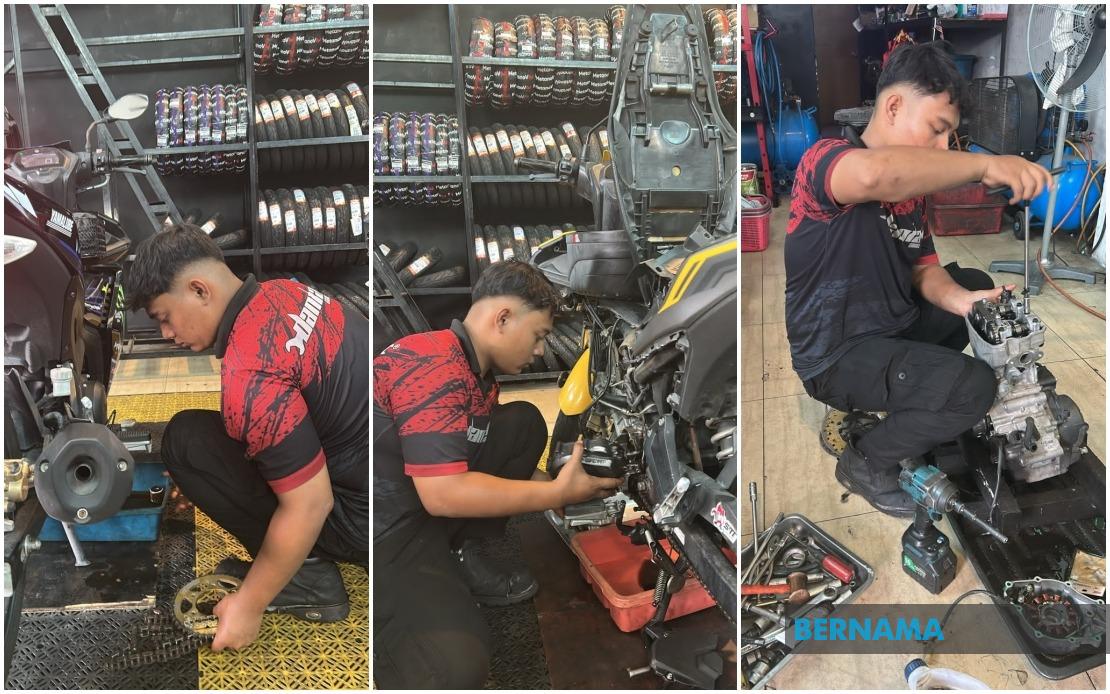
Malaysia's Academy in Industry programme has emerged as a transformative initiative that extends far beyond conventional vocational training, functioning instead as a comprehensive pathway for individuals facing educational or economic barriers to rebuild their lives through industry-aligned skills development. Operating from Kota Bharu and beyond, the ADI scheme represents a deliberate effort to synchronise educational outcomes with tangible market demands, creating genuine employment prospects for participants while simultaneously addressing persistent workforce deficiencies that plague Malaysian manufacturers and service providers.
The initiative recognises a fundamental reality within Malaysia's labour market: many talented individuals never complete formal schooling or face circumstances that prevent traditional educational progression, yet possess both the aptitude and determination to contribute meaningfully to the economy. Rather than viewing such candidates as losses to the system, ADI repositions them as valuable human capital awaiting activation. By combining structured theoretical instruction with hands-on workplace experience, the programme enables participants to earn recognised diplomas whilst simultaneously building practical competence that translates immediately into employability.
Muhammad Arif Nurul Azmi exemplifies the personal transformation ADI facilitates. At twenty years old and now based in Kajang, Selangor, Arif harboured entrepreneurial aspirations rooted in childhood curiosity about mechanics. His early years saw him progress from bicycle repairs to motorcycle maintenance, yet his knowledge remained fragmented and self-taught. Upon joining ADI and obtaining a Professional Diploma in Motorcycle Maintenance and Service, his perspective shifted fundamentally. The programme equipped him not merely with advanced technical competencies but equally crucially with business management knowledge—understanding workshop operations, standard procedures, and the administrative dimensions of entrepreneurship that separates hobby tinkerers from sustainable business operators.
Arif's articulated philosophy—that failure represents a learning opportunity rather than endpoint—reflects a mindset shift that transcends technical skill acquisition. ADI cultivates resilience and growth orientation alongside vocational competence, positioning graduates as adaptable professionals capable of navigating industry evolution. His ambition to establish his own motorcycle workshop, previously a vague aspiration, has crystallised into an achievable objective backed by systematised knowledge and recognised credentials.
The curriculum philosophy underpinning ADI deliberately mirrors real workplace environments rather than operating within abstract educational frameworks. Nurul Azura Md Adnan, Academy Director at Syarikat Nawireton Legacy Sdn Bhd (trading as Dania Garage), emphasises that instructional content derives directly from industry practices and contemporary operational standards. This alignment ensures that knowledge imparted within educational settings translates seamlessly to workplace contexts, minimising the transition period between graduation and productive contribution. The programme particularly stresses foundational discipline—rigorous time management, professional attitudes, and systematic progression from fundamental concepts to specialised advanced techniques.
The dual-pathway structure distinguishing ADI warrants particular attention. Participants simultaneously pursue formal diploma qualifications whilst gaining substantive workplace exposure, a combination that traditional vocational institutions rarely accommodate. This simultaneity creates multiple advantages: learners remain financially engaged through employment whilst studying, reducing economic pressure that typically forces disadvantaged youth toward income generation rather than skill development. Employers meanwhile benefit from labour that gradually matures into productivity rather than requiring extensive post-hire training. The arrangement represents intelligent policy design that aligns individual aspirations, employer interests, and government workforce development objectives.
Evidence from Dania Garage, where eight employees have participated in ADI since 2024, demonstrates measurable behavioural transformation. Chief Executive Officer Mohd Mustakim Mohd Munawir observed that programme participants exhibited heightened focus, forward-thinking orientation, and confidence in decision-making—precisely the qualities distinguishing reliable employees from adequate ones. These psychological and professional shifts often prove as valuable as technical competence; a worker who approaches challenges methodically and contributes ideas possesses intrinsic advantages beyond manual skill. The programme thereby cultivates human capital that extends beyond technical specification sheets into interpersonal and cognitive dimensions critical for workplace advancement.
From an employer perspective, ADI addresses the chronic skilled workforce shortage plaguing Malaysian industry. Companies across automotive, food processing, metals, and related sectors consistently report difficulty recruiting workers possessing both recognised qualifications and practical competence. Traditional recruitment channels often yield candidates with either theoretical credentials lacking workplace familiarity or experienced workers lacking formal recognition. ADI graduates transcend this binary by embodying both dimensions simultaneously—carrying recognised diplomas whilst demonstrating proven workplace capability. This resolves a persistent matching inefficiency within Malaysia's labour market.
The strategic framing positioning ADI as a linchpin connecting educational institutions with industry requirements reflects sophisticated policy architecture. By institutionalising dialogue between vocational training providers and employers across key sectors, the programme creates feedback mechanisms ensuring curriculum relevance. When employers articulate emerging skill requirements, educational institutions can systematically integrate those competencies into training modules. This responsiveness distinguishes ADI from legacy vocational systems that sometimes perpetuate outdated curricula disconnected from contemporary industrial practice.
For Malaysia's economic competitiveness, ADI's significance extends beyond individual beneficiaries. As Southeast Asian nations intensify competition for manufacturing investment and high-value production, workforce quality becomes increasingly decisive. Foreign investors evaluate prospective locations partly through labour availability and capability. A nation able to produce workers combining formal qualifications, practical competence, and professional maturity represents an attractive investment proposition. Conversely, persistent skill shortages constrain growth and encourage capital flight toward competing jurisdictions with superior talent availability.
The programme's emphasis on inclusivity—welcoming participants regardless of previous educational attainment or socioeconomic background—democratises economic opportunity in ways conventional systems struggle to achieve. Malaysia's educational structure traditionally creates bifurcation: successful students progress through standard pathways toward professional careers, while others face severely constrained prospects. ADI fractures this determinism by demonstrating that educational trajectory at age fifteen need not predetermine economic outcomes at age twenty-five. Such recalibration proves essential as Malaysia confronts demographic headwinds and competes internationally for talent.
Arif's stated hope that more young Malaysians embrace ADI reflects growing awareness that vocational pathways constitute legitimate and often superior alternatives to traditional academic credentials, particularly within technical fields. The persistent cultural preference for university degrees, despite misalignment with labour market demands in many sectors, represents inefficient human capital allocation. By celebrating ADI success stories and demonstrating tangible economic returns from vocational training, Malaysia gradually reorients perceptions around work and professional identity.
Looking forward, ADI's effectiveness depends upon sustained institutional commitment and continuous curriculum refinement. Expansion across additional sectors—healthcare services, digital infrastructure, renewable energy—would amplify the programme's impact. Equally important, monitoring graduate outcomes through longitudinal studies would provide evidence base for ongoing programme enhancement. If properly resourced and continuously evolved, ADI possesses genuine potential to become Malaysia's primary mechanism for inclusive skills development and inclusive economic growth.

