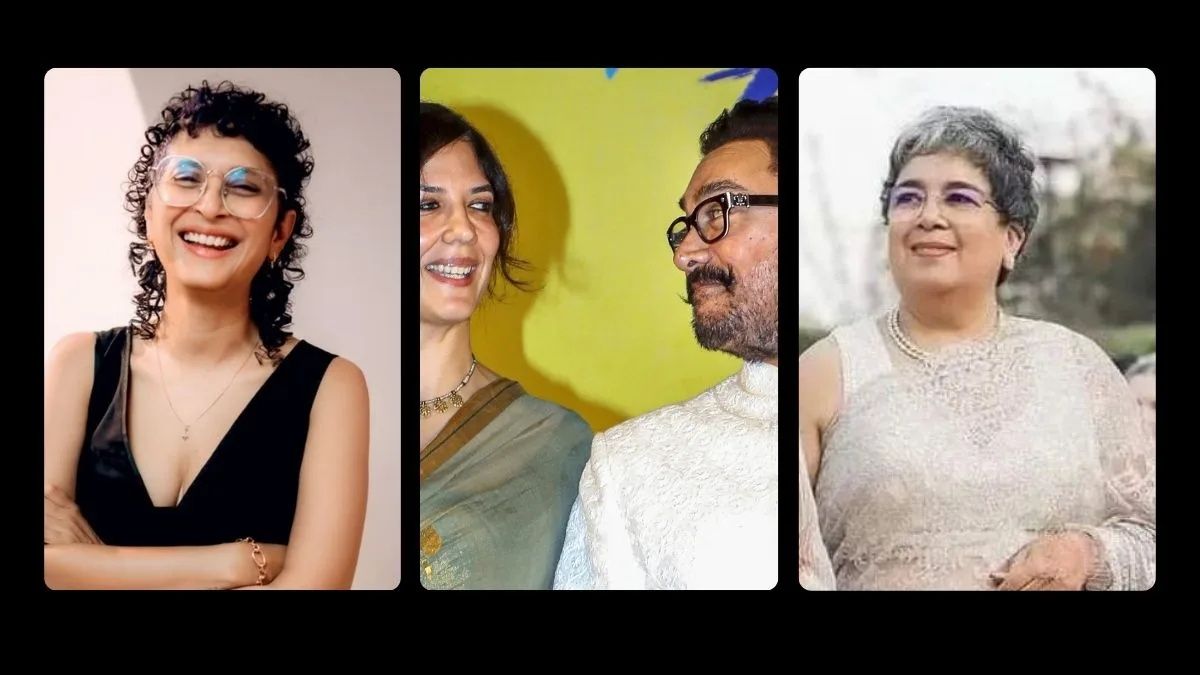
Bollywood actor Aamir Khan has pushed back against allegations that branded him the "brand ambassador of love jihad" in the wake of his marriage to longtime associate Gauri Spratt, stressing that his family has maintained a consistent approach to accepting individuals across religious lines without imposing conversion requirements.
In comments to Rediff, Khan articulated a defence rooted in his family's documented history. He highlighted that interfaith partnerships have been normalized within his household across multiple generations, with several relatives having married spouses from different religious backgrounds without any religious transformation taking place. The actor described this pattern as fundamental to his family's values, suggesting that the recent controversy misunderstands both his personal choices and the broader ethos of his household.
Khan enumerated specific examples to substantiate his argument. Both his sisters are married to Hindu men, while his daughter is also wed to a Hindu partner. Beyond the immediate family circle, he referenced his cousin, filmmaker Mansoor Khan, who is married to a Christian woman. These examples, Khan contended, demonstrate that interfaith unions have been woven into his family's fabric for considerable time, establishing a precedent that predates and contextualizes his own recent marriage.
Addressing his own matrimonial history, Khan methodically clarified the religious standing of each of his spouses. Neither his former wife Reena Dutta, with whom he was married from 1986 until their 2002 divorce, nor filmmaker Kiran Rao, whom he married in 2005 before separating in 2021, underwent religious conversion. His current wife, Gauri Spratt, similarly retained her Christian faith and does not actively practise religion, according to Khan's account. All three marriages were solemnized through civil ceremonies, Khan emphasized, further underscoring the secular framework within which these unions were formalized.
The actor's characterization of the accusations reflected his sense of absurdity about the allegations. He remarked that the situation exemplifies how discourse is becoming "more comical as time passes," suggesting frustration with what he perceives as baseless claims gaining traction in public discourse. His response indicates both exasperation and a desire to set the record straight through factual exposition of his family's practices.
Khan's first marriage to Reena Dutta lasted sixteen years before concluding in divorce, a relatively lengthy partnership by entertainment industry standards. His subsequent union with Kiran Rao, spanning sixteen years from 2005 until their 2021 separation, proved more enduring in professional terms, as the former couple have maintained collaborative ties and continue co-parenting their son despite the dissolution of their marriage. This sustained cooperation demonstrates the couples' commitment to moving beyond traditional divorce narratives.
His marriage to Gauri Spratt represents a fresh chapter for the actor. The ceremony took place on July 5 at Khan's Mumbai residence, formalizing a relationship that had developed gradually over more than two years of dating. The connection between Khan and Spratt, however, extends back significantly further—the two had maintained acquaintance for approximately twenty-five years before reconnecting in Bengaluru just over two years ago, facilitated by Khan's cousin Nuzhat Khan.
The rekindling of their friendship evolved organically into romantic involvement, culminating in their decision to formalize the relationship through marriage. Khan publicly acknowledged Gauri's presence in his life during his sixtieth birthday celebrations in March of the preceding year, introducing her to media representatives and effectively confirming their relationship at that juncture. The deliberate pace of their courtship, spanning more than two years before marriage, contrasts with narratives of sudden or impulsive unions.
The "love jihad" accusation reflects ongoing sociopolitical tensions in South Asia regarding interfaith relationships. The term, primarily deployed in India, carries pejorative connotations and is often weaponized against Muslim men in relationships with Hindu women, though the underlying anxiety extends to various religious combinations. Khan's emphatic rebuttal, grounded in documented family precedent and civil marriage frameworks, seeks to contextualize his choices within a secular, pluralistic family tradition rather than any ideological agenda.
For Malaysian observers, Khan's defence illuminates broader questions about religious tolerance and interfaith relations in diverse societies. While Malaysia's constitutional framework enshrines Islam's special position, the country nonetheless hosts significant interfaith marriages and relationships across its multiethnic, multireligious population. Khan's assertion that families can sustain interfaith bonds without conversion pressures resonates with experiences of Malaysian couples navigating religious and cultural differences, even as Malaysia's legal and administrative frameworks present distinct challenges absent in India's secular marriage law.
The controversy also highlights how public figures in South Asia increasingly face scrutiny regarding personal choices through explicitly religious lenses. Khan's methodical articulation of his family's secular approach to marriage and his refusal to accept the "love jihad" framing represent an attempt to reclaim narrative control over his personal life and reassert secular values in public discourse. His insistence that none of his spouses converted their religion constitutes a fundamental claim that religious identity remained peripheral to his matrimonial decisions.

