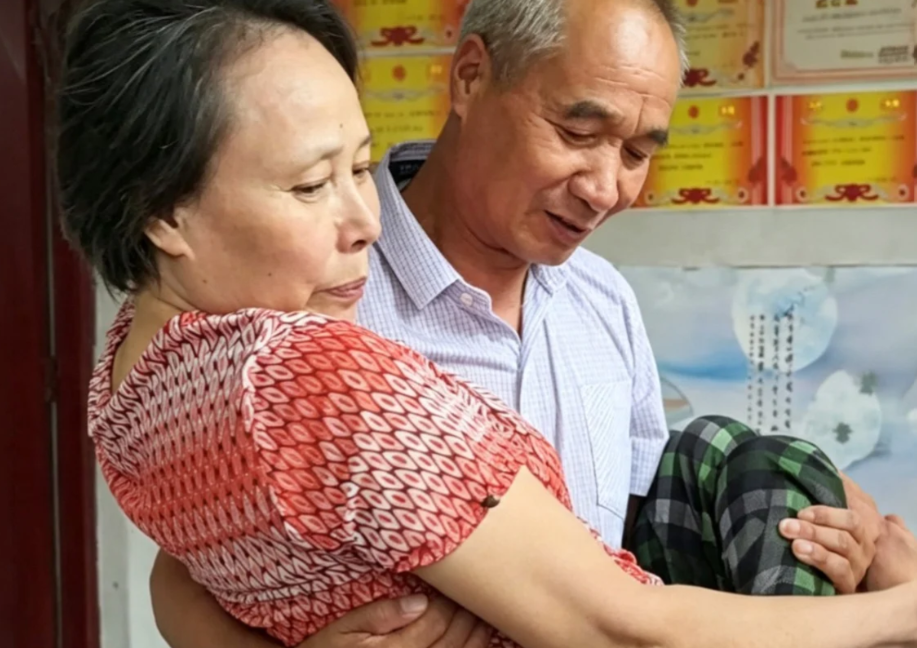
In the central Chinese city of Pingdingshan, an extraordinary narrative of matrimonial devotion has unfolded over two and a half decades, capturing the collective imagination of millions across mainland China through viral social media. The partnership between Li Junliang and his wife Jia Fang stands as a testament to unconditional commitment, following a catastrophic accident that fundamentally altered the trajectory of their family's existence in 2001.
Jia's life changed irreversibly during what should have been an ordinary day when she was 36 years old. A severe fall from a cliff while she was riding a pedicab left her paralysed from the chest downward, as documented by Henan TV. The accident occurred at a moment when their household was already navigating the complexities of parenthood, with their two children aged 10 and 13 at the time. What followed was an examination of human resilience, as Li, barely a year older than his wife, assumed the overwhelming responsibility of becoming her full-time caregiver whilst simultaneously raising their children and managing household affairs.
The physical demands imposed upon Li have been relentless and uncompromising. During the initial years following the accident, he maintained a gruelling schedule of repositioning Jia's body every two hours, a necessary measure to prevent the development of bedsores—a common and potentially devastating complication of paralysis. Over time, he adjusted this interval to every four hours, yet this modification has come at tremendous personal cost. For two decades, Li has systematically sacrificed complete nocturnal rest, operating on fragmentary sleep patterns dictated by his wife's medical requirements. Beyond these fundamental care tasks, his daily routine encompasses physical therapy work, with regular massage sessions designed to combat muscle atrophy, as well as assisting Jia into her wheelchair so she can experience sunshine and fresh air—small gestures that carry profound significance within the constraints of her condition.
The household that Li maintains reflects meticulous attention to cleanliness and organisation, a detail that neighbours regard with particular admiration given the extraordinary circumstances. One unnamed neighbour expressed considerable respect for Li's achievements, noting that sustaining such consistent care over decades represents an accomplishment few individuals could manage, let alone accomplish whilst maintaining a tidy domestic environment. This observation speaks to a broader truth about caregiver burden—the invisible labour required extends far beyond direct medical or physical assistance to encompass the entire ecosystem of family life.
Despite the substantial challenges inherent in supporting a paralysed spouse, Li has managed to nurture their children through their formative years to the point where both are now adults with families of their own. The walls of their home display certificates documenting their educational achievements, silent witnesses to the dedication Li invested in their upbringing during a period when many men might have abandoned such aspirations. This accomplishment reveals the full scope of Li's responsibilities—he was not merely a caregiver to his wife but also a primary parental figure to two growing children, all whilst sustaining the household financially through undisclosed employment.
The emotional dimensions of their relationship emerge powerfully through the voices of both parties. Jia has publicly acknowledged the transformation visible in her husband's appearance, noting that his hair has greyed entirely whilst hers remains largely black—a physical metaphor for the differential toll caregiving exacts upon the provider. Her expressions of gratitude carry particular weight given that she is articulating appreciation for a sacrifice made continuously, day after day, for 25 years. She has stated plainly, "I believe I am the happiest person in the world; I've married the right man," a declaration that reframes their shared suffering as encompassing profound satisfaction.
Li's response to his wife's gratitude reveals the philosophical framework sustaining his commitment. He has publicly declared his willingness to extend care for another 25, 35, or even 45 years—statements that transcend mere rhetoric to demonstrate a fundamentally different orientation toward obligation and partnership. Crucially, Li has framed his actions as the fulfilment of a wedding vow, suggesting that his caregiving extends from deep conviction rather than external compulsion. The promise he articulated on their wedding day—"Home is complete only with your presence"—has become the governing principle of his existence, a personal creed that has withstood the accumulated pressures of quarter-century duration.
The reverberations of their story throughout Chinese social media illuminate evolving cultural attitudes toward marriage, gender, and obligation. Online commentators have responded with overwhelming admiration, often expressing that such devotion represents an increasingly rare quality in contemporary society. The narrative has resonated particularly because it challenges assumptions about male caregiving roles whilst simultaneously affirming traditional marital commitments through radically unconventional circumstances. The couple's experience offers implicit commentary on contemporary values—a society moved by witnessing a man honour his promises suggests perhaps some anxiety about whether such honour remains normative.
From a broader Southeast Asian perspective, the Li-Jia narrative intersects with ongoing conversations about eldercare, spousal responsibilities, and the infrastructure supporting families navigating disability. In Malaysian contexts, where extended family networks and community support systems remain culturally significant, the reality that Li has shouldered this responsibility with apparently minimal institutional support raises questions about how different societies allocate caregiving burdens. Their story implicitly challenges assumptions about what constitutes acceptable or sustainable care arrangements, particularly as ageing populations across the region intensify focus on long-term care solutions.
The transformation of their private suffering into a public inspiration reflects something significant about contemporary media and emotional connection. That millions have engaged with this narrative suggests recognition of something profoundly moving—not merely the dramatic elements of the story, but perhaps the gap between widespread awareness of caregiving challenges and actual societal response. Their example stands simultaneously as an affirmation of human capacity for devotion and as an implicit indictment of systems that require such extraordinary personal sacrifice to manage disability within family structures.

