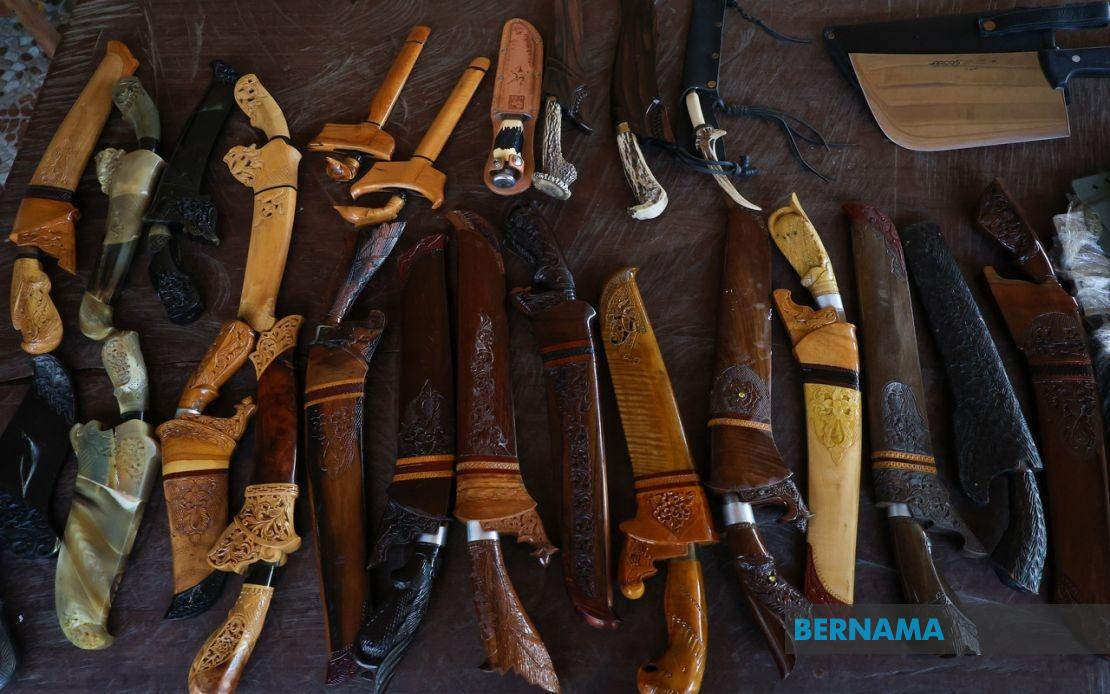
Ahmad's prized collection of more than 100 traditional and modern weapons, valued at approximately RM20,000, represents far more than personal acquisition—it stands as a material archive of Kelantan's disappearing blacksmithing heritage at a critical moment when the craft faces extinction. The 71-year-old collector has assembled machetes, knives, swords and keris from across the globe, including pieces from Germany, Sweden, Denmark, England, the United States, Japan, China, Spain and Portugal, yet his most treasured items remain the locally crafted works that embody generations of Kelantan artistry now at risk of vanishing forever.
Among Ahmad's most significant holdings are a knife featuring a deer-antler hilt from Sarawak and a keris fashioned from black kemuning wood with a golden kemuning wood hilt—pieces that showcase the remarkable diversity of Malaysian weaponcraft. However, his particular fascination centres on the bird-headed golok, a traditional Kelantan blade whose distinctive hilt design carries both practical and symbolic weight. The bird-shaped handle does more than simply provide ergonomic comfort; it represents a continuity with Kelantan's maritime and cultural identity, connecting contemporary craftsmanship to historical traditions that stretch back centuries.
Ahmad's understanding of the bird motif's significance reflects the deeper cultural archaeology embedded within these weapons. He traces the symbolism to the Petalawali bird figure that once adorned ancient boats of the Kelantan Sultanate, suggesting that what might appear as mere decorative flourish actually represents a conscious effort by blacksmiths to encode regional identity and historical memory into functional objects. This layering of meaning—where utility, aesthetic refinement, and historical consciousness converge—distinguishes traditional Malaysian weaponcraft from mass-produced alternatives and underscores why its loss would represent genuine cultural impoverishment.
The challenge Ahmad confronts reflects a broader Southeast Asian phenomenon: the accelerating disappearance of craft knowledge as master artisans age without sufficient successors willing to commit to lengthy apprenticeships and modest financial returns. His observation that "whenever a blacksmith passes away, part of that craft and knowledge disappears too, unless it is passed on to the next generation" articulates a critical concern facing heritage conservation across the region. Unlike written knowledge, which survives in archives, the embodied expertise required to forge metals, understand wood properties, and execute intricate carvings exists primarily in the hands and minds of living practitioners. When these individuals pass without transmitting their skills, entire methodologies and aesthetic traditions become irretrievable.
Ahmad's own entry into this world occurred approximately two decades ago when he assisted a friend working as a blacksmith, learning the technical and creative aspects of crafting weapon hilts and scabbards. This apprenticeship model, though informal by contemporary standards, demonstrates how knowledge transmission traditionally functioned—through sustained hands-on collaboration rather than classroom instruction. His subsequent decades of engagement with these crafts have positioned him as both student and custodian, accumulating not merely objects but understanding of the traditions they embody. The collection itself functions as a pedagogical resource for anyone genuinely interested in learning how Malaysian blacksmiths approached material challenges and expressed cultural values through their work.
The economic reality underlying the craft's decline cannot be overlooked. Handcrafted weapons command value precisely because each carving reflects the maker's unique identity, making every blade a distinct work embodying the craftsperson's artistic vision and technical mastery. Yet this same individuality, which gives traditional pieces their heritage significance, makes them difficult to mass-produce or standardize for commercial viability. Ahmad recognises that collectors valuing these works will always exist, as demonstrated by persistent interest in his own holdings, yet such demand remains insufficient to generate livelihoods sufficient for sustaining a cohort of active practitioners dedicated to the craft.
Preservation demands both philosophical commitment and meticulous practical attention. Ahmad maintains his collection in a dedicated cabinet, conducting inspections every three months and regularly applying protective oils to prevent blade deterioration and rust. This regimen reflects understanding that heritage conservation requires continuous, unglamorous labour—the opposite of dramatic restoration projects that capture public attention. His refusal to sell pieces despite collector interest, particularly items crafted by blacksmiths now deceased whose workmanship cannot be replicated, demonstrates prioritisation of cultural integrity over financial return. For Ahmad, these objects function not as commodities but as irreplaceable testimonies to vanished craftspeople and the knowledge they carried.
The significance of Ahmad's stewardship extends beyond Kelantan's borders into broader discussions about how Malaysia and Southeast Asia preserve material culture in the face of modernisation. His collection documents not only local blacksmithing but also international connections—the presence of pieces from multiple continents reveals how Malaysian craftspeople engaged with global networks of weaponcraft, adapting techniques and aesthetics while maintaining distinctive regional character. This cosmopolitan dimension complicates romanticised narratives of tradition as wholly isolated or unchanging, revealing instead how heritage emerges through creative negotiation with external influences.
The question of whether traditional weaponcraft can survive through innovation while retaining the identity and artistry that define it remains Ahmad's central concern and hope. He envisions a future where Malaysia's master blacksmiths' legacy continues not through nostalgic recreation but through genuine creative evolution—practices that honour historical foundations while responding to contemporary contexts and possibilities. This approach differs fundamentally from either pure preservation, which risks rendering traditions into museum pieces disconnected from living practice, or wholesale abandonment to commercial pressures that privilege quantity and consistency over individual artistry.
For Malaysian and Southeast Asian policymakers and cultural advocates, Ahmad's example illuminates urgent gaps in heritage support systems. The craft's survival requires not merely individual collectors' commitment but institutional recognition, adequate financial incentives for practitioners, formal apprenticeship opportunities, and cultural education emphasising these traditions' value. Without deliberate intervention, the knowledge Ahmad and others cherish will continue disappearing with each passing master, leaving future generations with only photographs and museum displays rather than living, evolving practices capable of generating new works that connect contemporary Malaysian communities to their cultural foundations.

