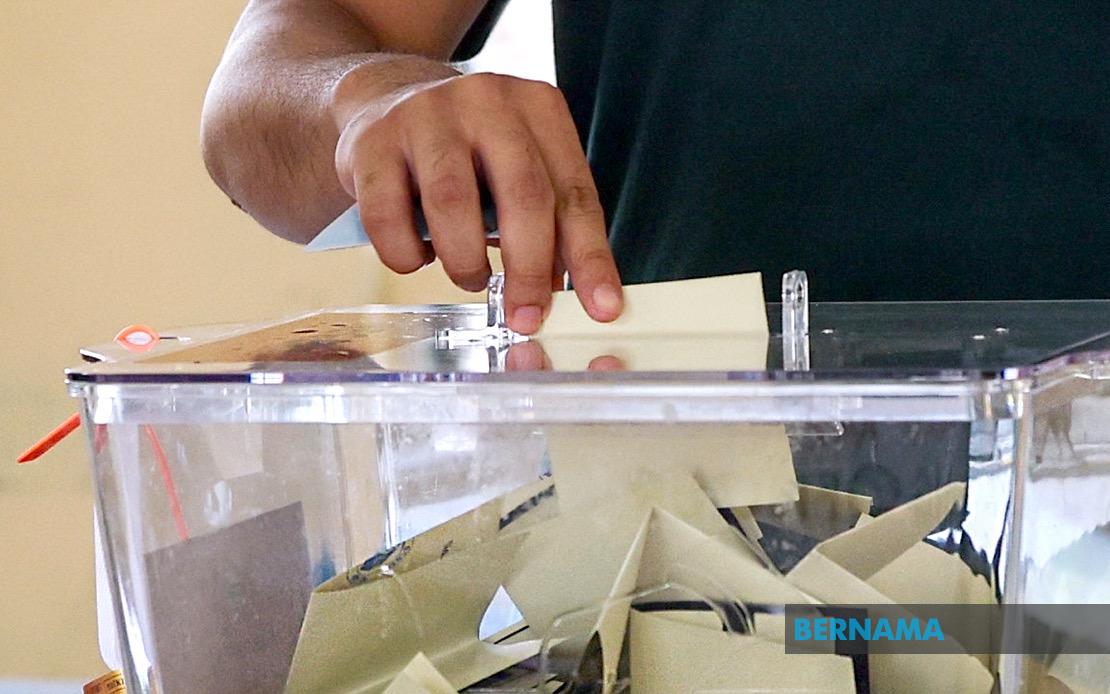
The 16th Johor state election concluded on July 11 with a poignant reminder of the complexities facing voters in Malaysia's second-largest state. Rahmat Shukor, a 57-year-old self-employed individual, became an unwilling footnote in the day's proceedings after driving 120 kilometres from Batu Pahat only to arrive at SJK (C) Foon Yew 4 polling centre in Johor Bahru precisely one minute past the official 6 pm closing time. His case underscores the frustrations that can emerge during large-scale electoral exercises, particularly for voters navigating the state's sprawling geography and unpredictable traffic conditions.
Rahmat's journey began in Sri Medan, a residential area in Batu Pahat, where he had chosen to stay overnight at his late mother's house after completing plantation and contract work. He had originally intended to return to Johor Bahru the previous evening, but exhaustion from his labour-intensive duties prompted him to rest and depart early on polling day instead. This decision, though understandable given his circumstances, ultimately proved costly. His family members, including his wife, had travelled back to Johor Bahru earlier on Friday and successfully cast their votes, leaving Rahmat as the sole family member unable to exercise his democratic right on election day.
The primary obstacle to Rahmat's timely arrival was severe traffic congestion that engulfed the main routes between Batu Pahat and Johor Bahru. Traffic began backing up significantly from the Simpang Renggam Rest and Recreation Area onwards, extending through Sedenak and into the Skudai corridor. Rahmat drove non-stop without breaks, attempting to compensate for anticipated delays by maintaining constant forward progress. Yet despite his proactive approach, he attempted multiple alternative routes to circumvent the heaviest congestion on the main Skudai road. These diversions, however, proved insufficient to overcome the cumulative time lost to traffic that had choked the state's key arterial routes throughout the day.
When Rahmat finally arrived at the polling centre, he carried evidence of his predicament. He possessed photographs documenting the traffic jam conditions and had notified polling officials of his situation. Outside the closed polling centre, he explained to media representatives that he had the documentation and photographic proof of his circumstances, hoping perhaps that the evidence might somehow mitigate his situation. His presentation of concrete evidence suggests he anticipated possible skepticism and sought to demonstrate that his lateness was not a matter of negligence or poor planning, but rather the consequence of external factors beyond his reasonable control.
The stringency of Malaysia's electoral regulations permits no exceptions to polling times. All 1,076 polling centres across Johor closed promptly at 6 pm, with no provision for late arrivals regardless of extenuating circumstances. This inflexibility, while necessary for maintaining electoral integrity and consistency across the state, creates genuine hardship for voters facing legitimate obstacles. For someone who had invested the time, effort, and fuel to travel 120 kilometres and had structured his entire day around the intention to vote, the one-minute shortfall represented a complete negation of his endeavour.
Rahmat's response to his disappointment reflected a mature acceptance of democratic procedures. Despite the frustration and sadness he naturally felt at missing the opportunity to cast his ballot, he acknowledged that the situation had occurred and expressed hope that the democratic process would proceed smoothly notwithstanding his personal setback. His philosophical acceptance suggests a respect for electoral institutions even in the face of personal adversity, and his measured response stands in contrast to the very real frustration he must have experienced.
This incident raises broader questions about accessibility and voter participation in Malaysia's electoral system. The 120-kilometre distance that Rahmat traversed illustrates the genuine geographic challenges facing voters in states like Johor, where population distribution spans significant distances. Traffic congestion of the severity described here is not uncommon on major state routes during high-traffic periods, yet election days often see elevated vehicle movement as voters travel to their designated polling centres. The combination of long distances, unpredictable traffic, and strict temporal boundaries creates a situation where even conscientious, determined voters may find themselves disenfranchised through no meaningful fault of their own.
From a regional perspective, Johor's voter participation dynamics deserve scrutiny. The state, as Malaysia's second-most-populous state and a crucial political battleground, typically records substantial electoral turnout. Yet cases like Rahmat's suggest that some eligible voters face systematic barriers to participation that extend beyond simple indifference or apathy. The rural-to-urban commuting patterns evident in his journey reflect broader demographic and economic trends across Southeast Asia, where voters often live at considerable distances from urban centres where employment and services concentrate.
The timing of the election added another layer to Rahmat's predicament. The July 11 voting day fell on a Friday, which might reasonably have been expected to reduce work-related pressures on potential voters. Yet Rahmat's continued engagement in plantation and contract work throughout the week demonstrates that not all employment follows conventional patterns. Self-employed individuals and those in informal economic sectors sometimes lack the flexibility that salaried workers might enjoy, potentially making their participation in elections more contingent on successfully navigating logistical obstacles.
Moving forward, Rahmat's experience merits consideration by electoral administrators and state policymakers. While no system can accommodate every possible contingency, mechanisms to address foreseeable issues—such as severe traffic affecting voters en route to polling centres—might reduce instances of unintended disenfranchisement. Some jurisdictions offer provisions for early or extended voting, or for voters delayed by documented emergencies, though Malaysia's current electoral framework does not feature such flexibility.
The broader implications of this incident extend to questions about electoral inclusivity and the practical experience of democratic participation in Malaysia. When determined voters who travel significant distances and arrive mere minutes late are nevertheless completely unable to vote, the system reflects a rigidity that, while procedurally defensible, may warrant reconsideration. Rahmat's case, while individual, exemplifies a category of potential barrier that shapes voter participation patterns across the nation, particularly in large states where geographic dispersion remains a persistent challenge to equitable electoral access.

