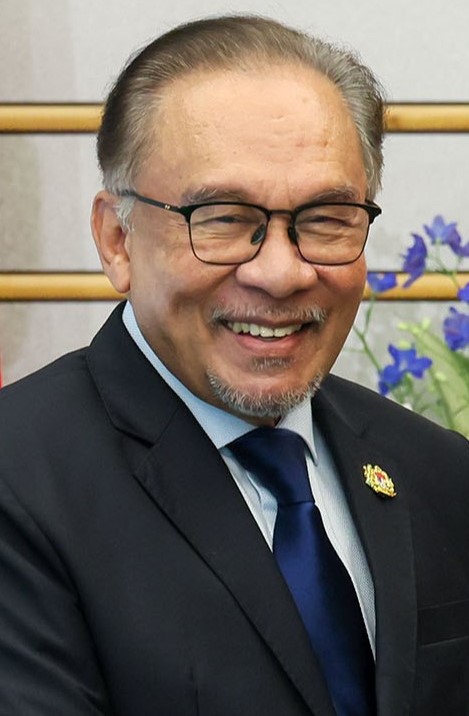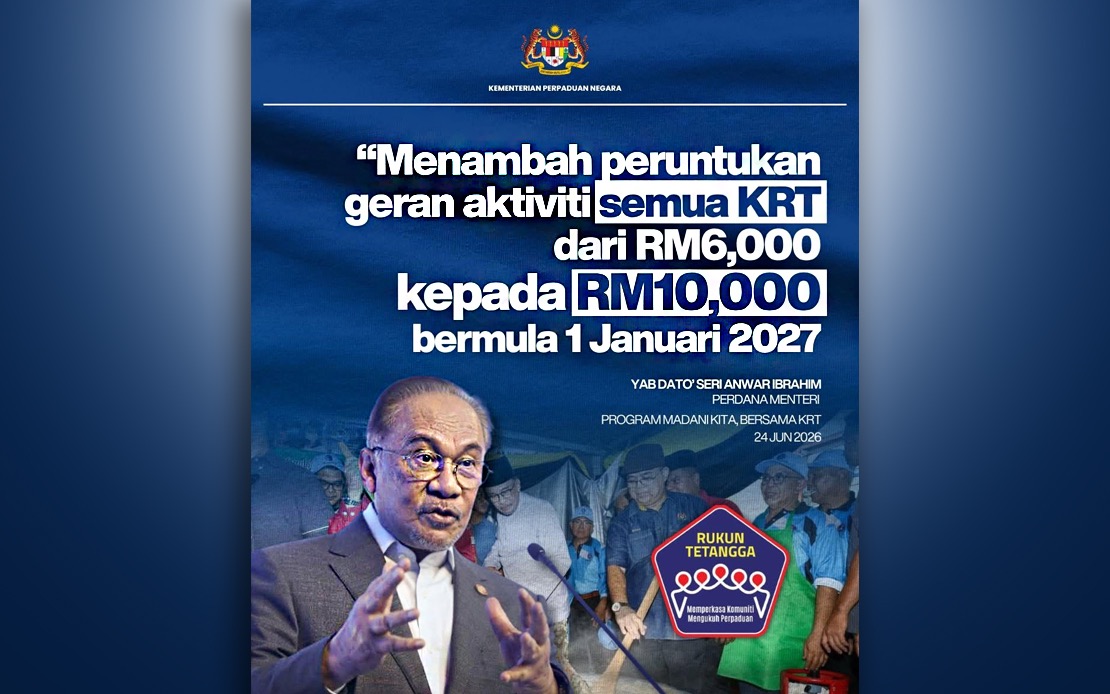
Prime Minister Datuk Seri Anwar Ibrahim has announced a significant financial boost for Malaysia's neighbourhood watch movement, with the annual grant for KRT (Kawasan Rukun Tetangga) groups increasing from RM6,000 to RM10,000. The decision, unveiled during the MADANI KITA programme at Dataran Segamat in Johor on June 24, will extend support to all 8,615 neighbourhood watch areas across the country, with disbursements commencing on January 1, 2027. National Unity Minister Datuk Aaron Ago Dagang characterised the raise as recognition of KRT's pivotal contribution to Malaysia's social fabric over more than fifty years of operation.
The neighbourhood watch system represents a foundational pillar of Malaysia's community governance structure, operating as a bridge between government institutions and ordinary citizens at the grassroots level. With approximately 250,000 active members nationwide, KRT groups currently reach more than 12 million Malaysians through their various initiatives. Over the preceding twelve months alone, these community organisations had orchestrated more than 100,000 separate activities, demonstrating their extensive reach and operational capacity. The grant enhancement acknowledges both this existing contribution and the government's determination to expand the scope and depth of community-driven development across the nation.
The increase carries substantial implications for how neighbourhood watch groups can address local priorities. Previously constrained by the RM6,000 annual allocation, KRT organisations have had to make difficult choices about which community needs to prioritise. The additional RM4,000 annually—representing a 67 percent increase per group—provides meaningful flexibility to expand existing programmes or launch new initiatives tailored to neighbourhood-specific concerns. For a typical Malaysian neighbourhood of 300 to 500 households, this translates to greater per-capita investment in community welfare and development activities, potentially transforming what these organisations can accomplish.
Aaron emphasised that the Ministry of National Unity views this financial commitment as integral to the broader MADANI framework, which prioritises empowering grassroots movements as engines of social progress. He articulated the government's perspective that community-level initiatives constitute the genuine foundation upon which national unity and development must be constructed. Rather than imposing top-down solutions, the MADANI approach recognises that sustainable change originates when neighbours themselves take ownership of local challenges and opportunities. This philosophical positioning suggests the grant increase reflects deliberate policy strategy rather than merely budgetary generosity.
The range of activities that enhanced funding could support spans multiple dimensions of community life. Unity-focused programmes—particularly important in Malaysia's multicultural context—can receive greater resources for inter-faith dialogue, celebration of national occasions with wider participation, and conflict resolution mechanisms at the neighbourhood level. Community development initiatives, from improving public spaces to establishing skill-training workshops, become more feasible with expanded budgets. Welfare provisions for vulnerable residents, education support for disadvantaged children, and neighbourhood security measures all stand to benefit from increased financial capacity. Local economic empowerment schemes, such as cooperative ventures or microenterprise support, gain resources to scale beyond token gestures.
For Malaysian regions with concentrated lower-income populations or areas facing specific social challenges, the grant increase holds particular significance. Neighbourhood watches operating in such contexts have historically struggled to move beyond basic security functions due to budget constraints. Enhanced funding creates opportunity to pivot toward more comprehensive community development, addressing root causes of social fragmentation rather than merely managing symptoms. This shift aligns with the MADANI government's stated commitment to inclusive development and reducing inequality at the community level.
Aaron's emphasis on neighbourliness as the cornerstone of national unity reflects a sophisticated understanding of Malaysia's multicultural reality. In a nation comprising diverse religious, ethnic, and cultural communities, social cohesion ultimately depends not on grand national gestures but on daily interactions between neighbours of different backgrounds. KRT organisations facilitate these interactions through community events, collaborative problem-solving, and mutual support networks that transcend demographic boundaries. When trust exists at the neighbourhood level—where people see each other regularly, cooperate on shared challenges, and celebrate together—the foundation for national harmony becomes genuinely robust.
The implementation timeline, commencing January 2027, provides sufficient lead time for the Ministry of National Unity to develop guidance frameworks ensuring optimal utilisation of enhanced resources. This interval allows KRT groups to plan expanded programming, potentially train volunteers for new initiatives, and coordinate with local government structures to align neighbourhood activities with broader municipal development priorities. The staggered rollout also enables the government to establish monitoring mechanisms ensuring funds reach intended activities and deliver measurable community impact.
For Southeast Asian observers, Malaysia's investment in grassroots community organisations offers a model worth noting. Many regional nations struggle with balancing national development imperatives against local community autonomy and social cohesion. The KRT system, with government financial support channelled through neighbourhood-level organisations rather than centralised bureaucracies, demonstrates an alternative approach emphasising subsidiarity and community agency. Whether this model could be adapted or replicated in other regional contexts represents an interesting policy question.
The grant increase also signals government recognition that effective social policy requires sustained, adequate resourcing at the implementation level. Underfunded community organisations, regardless of their dedication and commitment, inevitably struggle to deliver meaningful outcomes. By materially improving financial capacity, the government acknowledges that ambitious social goals—building unity, developing communities, empowering citizens—demand corresponding investment. This represents an important affirmation to volunteers and community leaders that their work is valued and supported.
Looking forward, the success of this initiative will depend substantially on how KRT organisations utilise the enhanced funding and whether government ministries coordinate effectively to support neighbourhood-level implementation. Community leaders will need to balance diverse local priorities—some neighbourhoods may prioritise security, others education or welfare—while maintaining transparency and accountability in resource utilisation. Government agencies, from local authorities to ministry departments, will need to recognise KRT groups as genuine partners in development rather than merely as implementation arms for centrally-designed programmes.
Ultimately, the decision to increase KRT grants from RM6,000 to RM10,000 represents more than a budgetary adjustment. It constitutes a governmental statement that Malaysia's future development depends fundamentally on strengthening the institutions and relationships at the neighbourhood level where Malaysians actually live their daily lives. Whether across ethnic, religious, or socioeconomic lines, the quality of community interactions shapes national prospects. By investing in the organisations that facilitate these interactions, the government positions itself as supportive of the grassroots movements that genuinely drive social progress and national cohesion.