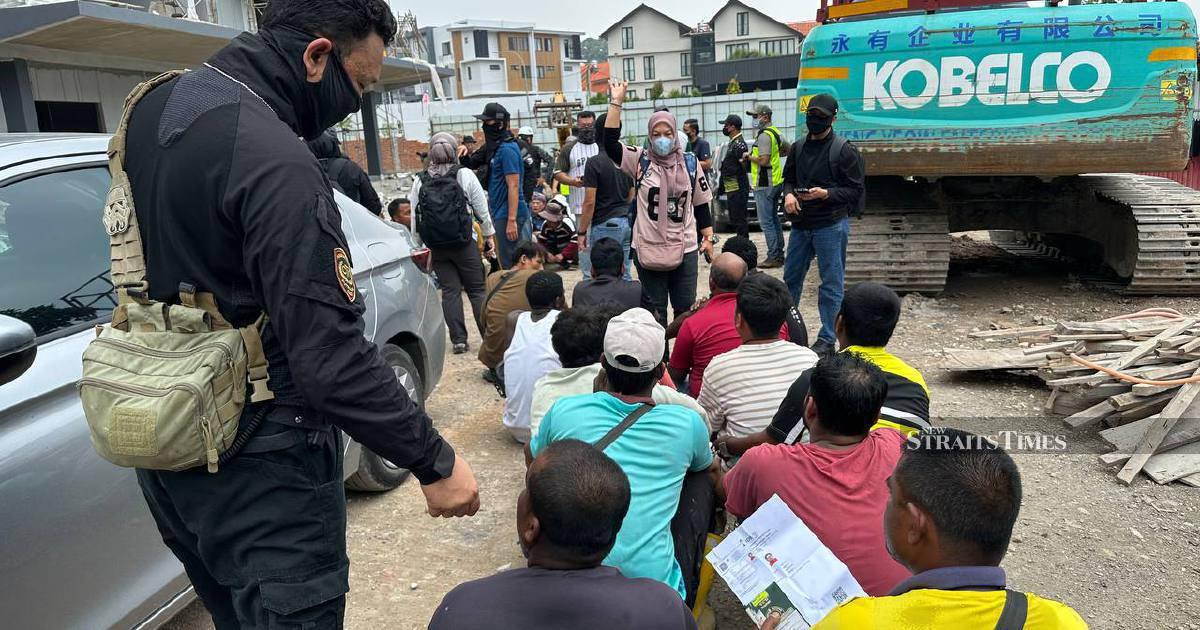
Authorities in Malaysia have detained 528 foreign workers across eight construction sites following a coordinated enforcement sweep that concluded today, marking another significant attempt to address undocumented labour and immigration irregularities in the country's building sector. The joint operation, which involved multiple government agencies working in tandem, targeted sites where immigration violations were suspected to be widespread.
Construction remains one of Malaysia's most labour-intensive industries, employing hundreds of thousands of migrant workers from neighbouring countries and beyond. The sector's reliance on foreign nationals has long created challenges for immigration authorities attempting to monitor compliance with work permits and visa regulations. The scale of today's operation underscores ongoing concerns about the degree to which undocumented workers infiltrate major building projects across the country, often working without proper authorisation or verification by employers.
The eight construction sites selected for the operation span different regions, suggesting that the crackdown was not limited to a single development corridor but reflected a broader, systematic approach to enforcement. This geographical distribution indicates that irregular employment practices in construction are not isolated incidents but rather endemic challenges affecting multiple locations simultaneously. The comprehensive nature of the joint operation demonstrates coordination between immigration authorities, police, and construction oversight bodies working to strengthen workplace compliance.
Foreign workers in Malaysia's construction industry often enter the country through legitimate channels but subsequently work beyond the scope of their permits, or are hired by contractors who employ undocumented labourers to reduce operational costs. The widespread nature of such practices means that major building projects—from residential developments to infrastructure work—may unknowingly or deliberately utilise unauthorised workers. The 528 detainees represent individuals caught at various stages of employment irregularity, whether lacking valid documentation, overstaying visas, or employed in violation of permit conditions.
The enforcement effort carries broader implications for Malaysia's efforts to regulate the informal labour market and strengthen protections for migrant workers. While crackdowns secure headlines, they are typically conducted after violations have already occurred, placing the onus on reactive rather than proactive measures. Authorities have periodically intensified operations to signal commitment to compliance, yet the persistence of such large-scale sweeps suggests that preventative measures embedded within hiring practices remain insufficiently enforced.
For construction companies, the operation serves as a reminder of legal obligations to verify worker documentation before employment. Contractors found harbouring undocumented or visa-violating workers face penalties including fines and potential project suspension. However, industry observers note that the economic incentive to hire cheaper, undocumented labour often outweighs penalties, particularly when enforcement gaps persist. The cost differential between documented and undocumented workers can amount to significant savings across large projects, creating persistent pressure to flout regulations.
The detained workers now face processing through immigration procedures that may result in investigation, penalties, or deportation, depending on the severity of violations and their cooperation with authorities. Many arrested individuals are likely to be held pending determination of their immigration status and the outcome of legal proceedings. For workers from countries such as Indonesia, Bangladesh, Myanmar, and Nepal—the primary sources of construction labour in Malaysia—deportation means loss of income and disruption to family arrangements that may depend on remittances from employment in Malaysia.
The operation also highlights the vulnerabilities of migrant workers who operate outside formal employment frameworks. Without legitimate documentation, workers are exposed to exploitation by unscrupulous employers, denied access to safety protections, and unable to lodge complaints about wage theft or hazardous conditions. The criminalisation inherent in immigration enforcement can further discourage workers from reporting abuses to authorities, creating cycles where violations compound without remedy. This dynamic remains a persistent concern among labour rights advocates monitoring Malaysia's treatment of migrant populations.
From a regional perspective, Malaysia's construction crackdowns reflect broader Southeast Asian efforts to manage irregular migration amid demand for unskilled labour. Similar operations occur periodically across Thailand, Singapore, and other regional economic hubs. The challenge persists because source countries often have limited capacity to regulate outward labour migration, while destination countries struggle to balance economic needs for foreign workers against concerns about border security, labour market impacts, and regulatory compliance.
The timing and scale of today's operation may reflect intensified focus ahead of major infrastructure deadlines or in response to specific intelligence about violations on particular sites. Construction timelines and budget pressures can incentivise corners-cutting on worker verification, making certain periods or projects higher-risk targets for enforcement. The selection of eight sites suggests either intelligence-driven targeting or a scheduled, systematic sweep of major active developments across multiple jurisdictions.
Looking forward, sustainable solutions to irregular construction employment likely require closer collaboration between contractors, labour-supplying agencies, and government bodies to embed compliance verification earlier in hiring processes. Digital documentation systems, mandatory third-party audits of worker credentials, and targeted inspections during project phases could reduce opportunities for violations. However, such measures demand investment in administrative capacity and enforcement infrastructure that many jurisdictions have been slow to prioritise, meaning reactive crackdowns like today's operation may remain the dominant enforcement tool in the foreseeable future.

