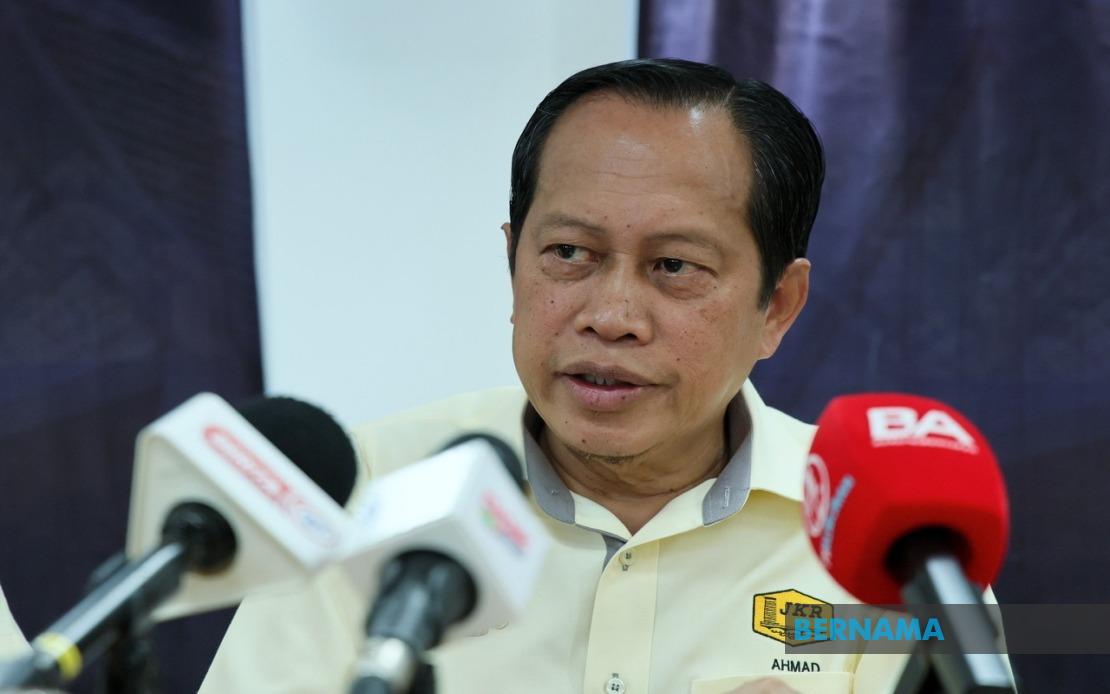
The federal government has accelerated its school infrastructure development programme, with Deputy Works Minister Datuk Seri Dr Ahmad Maslan announcing that 524 additional classroom projects totalling RM668 million are now in progress across the nation. The projects are specifically designed to accommodate Year One students entering schools in the 2027 academic session, reflecting a proactive approach to managing growing enrolment pressures in Malaysian primary education.
Of the total project portfolio, 517 have received formal Letters of Acceptance from the authorities, representing a 98 percent approval rate that underscores the government's commitment to timely implementation. Three projects have already been completed, ahead of their original delivery schedules, signalling that the construction and approval machinery is functioning with reasonable efficiency. The handover of the first completed project took place at Sekolah Menengah Kebangsaan Tok Jembal in Terengganu, with Education Minister Fadhlina Sidek officiating the ceremony alongside the Terengganu Public Works Department.
The infrastructure expansion programme is being executed using advanced construction methodologies, specifically modular building techniques and the Industrialised Building System. These modern approaches offer several advantages over conventional construction, including reduced timeline delays, improved quality control, and enhanced cost predictability. Such methods are increasingly favoured in Southeast Asia for large-scale educational infrastructure projects, as they allow parallel work streams and easier quality assurance at factory settings before on-site assembly. For Malaysia, the adoption of these techniques suggests a shift toward more efficient public sector project delivery.
The 524 projects collectively address capacity shortfalls across 459 schools, generating a total of 1,780 new learning spaces. The breakdown reveals important policy priorities: 1,255 classrooms are standard facilities for mainstream students, while 525 classrooms are designated for the Special Education Integration Programme, known locally as PPKI. This significant allocation toward special education integration reflects Malaysia's ongoing commitment to inclusive education, ensuring that students with various learning needs have adequately resourced facilities within mainstream school environments rather than only in segregated settings.
The geographical distribution of projects reveals a concentration in the more densely populated and economically developed states. Selangor, the nation's most populous state and economic engine, leads with 143 approved projects, all of which have received formal acceptance. Kedah follows with 93 projects, of which 92 have been approved, while Johor records 47 projects with 45 approvals. This distribution pattern reflects both demographic pressures from urbanisation and the infrastructure demands arising from Malaysia's uneven population growth across regions.
Terengganu and Penang represent the next tier of implementation, each with substantial commitments. Terengganu has 45 projects with all letters of acceptance granted, while Penang advances 30 projects similarly approved. Perak contributes 22 projects, of which 18 have received formal approval, indicating slightly slower progress that may reflect capacity constraints in smaller states' construction and project management capabilities. The pattern across these states suggests that approval rates are generally high, with most variations attributable to administrative processing timelines rather than fundamental policy obstacles.
The remaining states show proportionally smaller allocations but universal approval rates. Pahang advances 50 projects, Melaka 69, and Kelantan 10, each with all letters of acceptance in place. Perlis contributes 8 projects, while the federal territories of Labuan and Kuala Lumpur add 3 and 2 projects respectively. Negeri Sembilan rounds out the nationwide allocation with 2 projects. These figures underscore how the government has distributed infrastructure investment across all states, acknowledging that enrolment growth pressures exist even in less urbanised regions, and ensuring that no state faces critical capacity shortages by 2027.
The RM668 million investment represents a substantial commitment to education infrastructure, particularly significant given competing demands on the federal budget. When distributed across 1,780 classrooms, the average cost per classroom amounts to approximately RM375,000, which is reasonable for modern educational facilities incorporating contemporary design standards and safety requirements. This investment level suggests facilities will not merely provide seating capacity but should include contemporary amenities supporting pedagogical quality.
The timing of this announcement is strategically important for Malaysian education planning. With Year One intake scheduled for 2027, schools and state education departments now have clarity regarding infrastructure capacity five years hence, allowing them to plan teacher recruitment, curriculum material procurement, and administrative resource allocation with greater certainty. For parents and communities, the announcement signals that the government is actively managing the educational system's growth trajectory rather than allowing infrastructure deficits to develop reactively.
From a regional perspective, Malaysia's approach to managing school expansion through industrialised building methods and advance planning contrasts with several Southeast Asian peers that continue grappling with chronic classroom shortages and aging infrastructure. The success of this programme could potentially offer lessons for neighbouring countries facing similar demographic and urbanisation pressures on their education systems. However, implementation success will ultimately depend on whether projects maintain their current approval momentum and whether quality standards are upheld as construction scales up across hundreds of simultaneous projects.
Beyond the immediate infrastructure dimension, the emphasis on special education facilities within mainstream schools reflects evolving international thinking about inclusive education. By allocating 525 classrooms specifically for PPKI, the government signals that integration is not merely aspirational policy but backed by concrete resource commitment. This approach requires careful implementation, including teacher training and curriculum adaptation, to ensure that inclusive facilities translate into genuinely inclusive learning experiences rather than merely co-locating students with different needs.
The challenges ahead centre on execution consistency. Delivering 524 projects simultaneously across eleven states and federal territories, particularly those requiring modular and industrialised methods, demands sustained coordination between federal and state authorities, private contractors, and education agencies. Supply chain disruptions, labour availability, and cost inflation could threaten timelines, particularly if the projects extend beyond 2027. Maintaining quality standards while accelerating construction schedules requires robust oversight mechanisms and penalty provisions to discourage corner-cutting or material substitution.
Ultimately, this programme represents Malaysia's recognition that primary school enrolment will grow substantially through the late 2020s, necessitating preemptive infrastructure investment. If executed successfully, by 2027 Malaysian schools will have substantially more learning capacity, better-resourced special education programmes, and demonstration projects showcasing modern construction methodologies. The real test will come when students actually occupy these new facilities and educators assess whether infrastructure quality matches the ambition of the investment.

