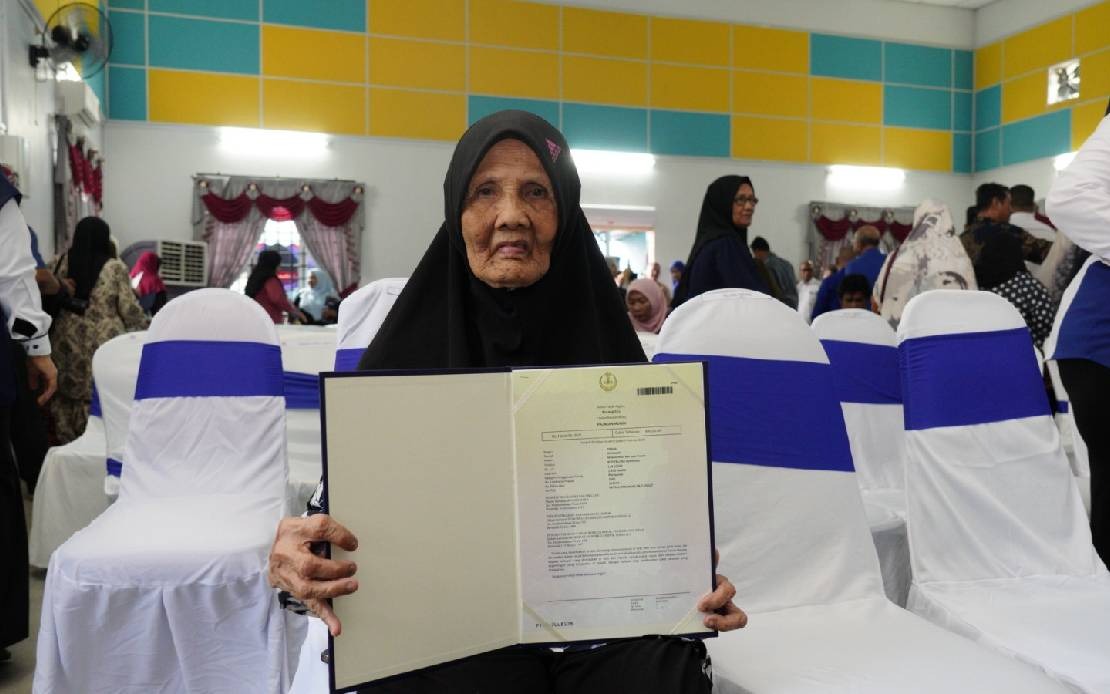
Forty-seven rural participants in Perak have received formal land ownership grants through the FELCRA Berhad Seri Gala Area Village Rearrangement Programme, marking another milestone in the federal land development agency's long-running effort to transform previously idle agricultural land into productive economic assets. The grant handover ceremony, held in Ipoh on July 14, reflects what state officials describe as a proven model of sustainable rural development that goes beyond simple infrastructure projects to fundamentally alter the economic circumstances of farming communities.
Perak Menteri Besar Datuk Seri Saarani Mohamad positioned the FELCRA Consolidation and Rehabilitation Programme as among Malaysia's most effective rural initiatives, arguing that its approach tackles multiple development challenges simultaneously. Rather than viewing land development as a purely physical undertaking, officials now frame it as a comprehensive strategy that generates employment, stimulates local entrepreneurship, and rebuilds community confidence in the viability of agricultural pursuits. The symbolic importance of transferring formal ownership documents carries particular weight, according to state leaders, as it secures generational wealth for farming families and establishes tangible assets that can be leveraged for future investment.
The evolution of FELCRA's operational approach underscores shifting priorities within Malaysia's rural development apparatus. What began decades ago as an agency focused on opening up new farmland has matured into an institution concerned with improving the productivity and profitability of existing holdings while addressing the social dimensions of agricultural life. The grant ceremony, coupled with the inauguration of a new Seri Gala administrative facility, demonstrates the physical infrastructure now accompanying these programmes—a recognition that rural development requires institutional capacity building alongside agricultural reform.
Perak's significance in the national FELCRA footprint has grown substantially. The state now manages nearly 32,000 hectares of developed land involving approximately 20,000 participant families, positioning it as the country's second-largest operational region after Pahang. This scale reflects both the historical importance of agriculture in Perak's economy and the concentrated effort to modernise farming communities across the northern peninsula. The concentration of FELCRA activity in states like Perak and Pahang suggests a deliberate geographic strategy focused on regions with established agricultural heritage and significant rural populations still dependent on traditional farming livelihoods.
The philosophical framing of contemporary rural development has shifted markedly from earlier decades. Officials now emphasise human capital development, economic strengthening, and community agency rather than exclusively focusing on land preparation and crop production. Deputy Prime Minister Datuk Seri Dr Ahmad Zahid Hamidi's recent remarks during World Rural Development Day 2026 celebrations in Jengka, Pahang, crystallise this broader conceptual change—rural areas must be viewed as communities capable of determining their own futures, not merely zones awaiting development input from central authorities. This ideological repositioning reflects Malaysian policymakers' recognition that sustained rural prosperity requires enlisting local initiative rather than imposing external solutions.
The practical implications of formalising land ownership for 47 additional families extend beyond individual family finances. When rural participants hold secure legal title to developed land, they gain collateral for agricultural financing, confidence to invest in improvements and modern techniques, and inheritance security for their children. These individual benefits aggregate into community-level advantages: improved credit availability stimulates local commerce, better-maintained holdings increase land productivity, and generational stability reduces rural-urban migration pressures. For Perak specifically, strengthening the economic foundation of farming communities helps retain agricultural labour capacity and maintains the rural tax base.
The geographic distribution of FELCRA development across Malaysia reflects historical settlement patterns and soil suitability, but also reveals persistent regional inequalities in agricultural modernisation. Concentrating major initiatives in Perak and Pahang means other states with smaller FELCRA footprints may face different development trajectories. This spatial dimension of rural policy carries political implications: communities viewing their regions as neglected relative to flagship FELCRA states may develop grievances, while areas receiving sustained investment generate political goodwill. The Seri Gala grant ceremony functions partly as symbolic reassurance to Perak's farming communities that state and federal governments remain committed to their economic advancement.
The relationship between formal land ownership and rural economic transformation warrants careful observation. While secure tenure is necessary for most development outcomes, it remains insufficient without complementary investments in infrastructure, market access, extension services, and credit facilities. FELCRA's maturation into a more comprehensive development agency suggests recognition of this complexity, yet implementing integrated programmes across dispersed rural areas presents persistent logistical and budgetary challenges. The new Seri Gala administrative facility presumably enhances FELCRA's capacity to deliver such integrated support, though capacity constraints likely remain significant across the broader programme.
For Malaysian policymakers, the Seri Gala initiative exemplifies the tension between agricultural development and modernisation goals. Rural development initiatives must simultaneously preserve agricultural livelihoods, improve farmer incomes, and prevent distress migration to urban areas—sometimes contradictory objectives. Land ownership grants alone do not guarantee participants will remain in farming or that their children will continue agricultural pursuits. If farming becomes insufficiently profitable despite land ownership formalisation, young people will inevitably migrate townward. The success or failure of FELCRA's current model will ultimately depend on whether secure land ownership combines with profitable production opportunities to make farming an attractive generational career.
The implications for Southeast Asia's broader rural development landscape merit consideration as well. Malaysia's approach—combining government-managed land consolidation with formal ownership transfers and institutional support structures—differs substantially from models pursued across the region. Countries observing FELCRA's evolution may extract relevant lessons regarding the institutional architecture required to modernise agricultural sectors while preserving rural communities. Whether FELCRA's approach ultimately proves transferable depends on contextual factors including available government capacity, land availability, and the broader structure of rural economies in different national settings.

