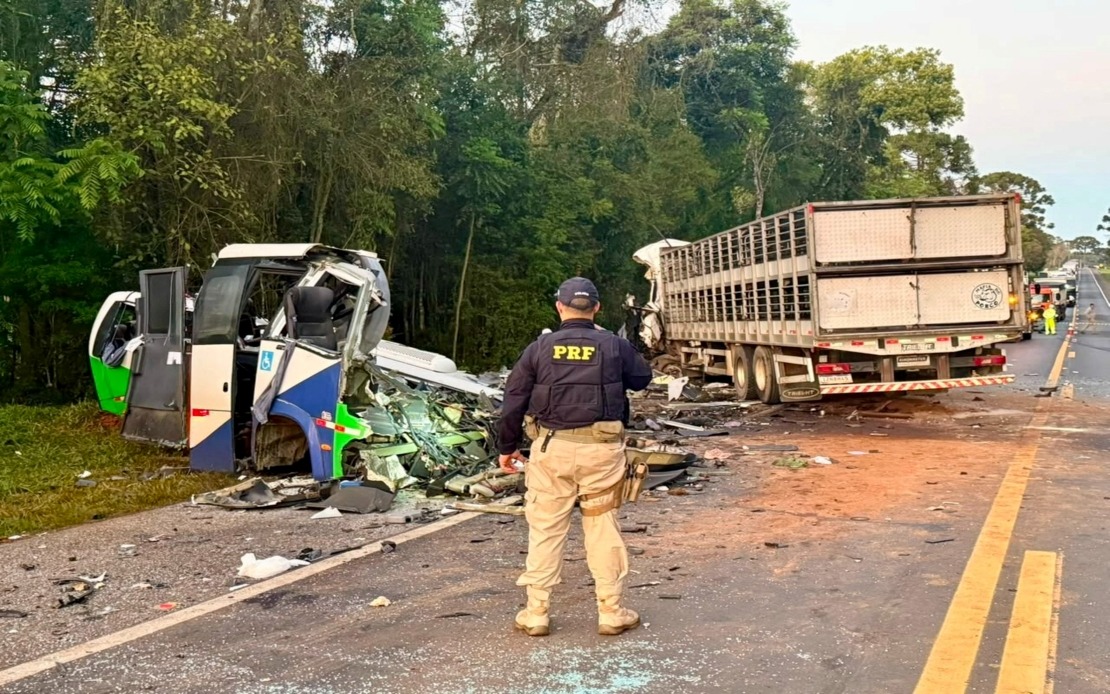
A tragic road collision in the southern Brazilian state of Paraná has claimed 23 lives, underscoring the persistent dangers of highway transport in the region. The accident happened early Wednesday near Ipiranga in the Campos Gerais region when a minibus carrying patients struck a lorry head-on on a national road corridor. Among the deceased are 13 women, eight men, and two children, with preliminary investigations suggesting the lorry veered into the opposing lane before the catastrophic impact.
The minibus involved in the collision belonged to the regional health service and was transporting patients toward medical facilities in the greater Curitiba metropolitan area, approximately 200 kilometres from the accident site. This detail renders the tragedy particularly poignant, as the vehicle was in transit to provide healthcare rather than routine passenger transport. Five additional individuals sustained injuries in the crash and received emergency care at nearby medical facilities following the incident.
The Paraná State Secretariat for Public Security confirmed the death toll and injury figures, though investigators continue examining the exact sequence of events that led to the head-on impact. The preliminary assessment that the lorry migrated into the oncoming traffic lane represents a working hypothesis rather than a definitive conclusion at this stage of the inquiry. Road conditions, visibility, vehicle speeds, and driver fatigue remain under examination as potential contributing factors.
The collision occurred on a section of Brazil's national highway network that carries significant traffic between multiple regions of the southern states. In many stretches, this major thoroughfare operates as a two-lane highway rather than a divided expressway, creating inherent risks when vehicles cross into opposing lanes. Such infrastructure limitations compound the dangers faced by long-distance travellers and commercial operators throughout the region.
For Malaysian readers familiar with domestic road safety challenges, this incident illustrates how highway design and capacity constraints contribute to accident severity across different nations. Brazil's highway system, while extensive, frequently operates near or beyond capacity in critical corridors connecting population centres. The absence of physical barriers separating opposing traffic flows means that driver error or mechanical failure can produce catastrophic consequences, a reality that resonates with road safety concerns throughout Southeast Asia.
Authoritarian accident scenes require extensive investigation and recovery operations that disrupt traffic flow significantly. In this instance, the collision site remained completely cordoned off for several hours as authorities conducted initial surveys, removed vehicles, and attended to casualties. Such closures cause cascading delays across the wider transport network, affecting commercial logistics and passenger movement throughout the region.
The Paraná state government formally declared three days of official mourning in response to the tragedy, acknowledging the scale of loss within the local community. This formal recognition reflects the impact such accidents generate beyond immediate victim families, affecting broader public sentiment regarding road safety governance and infrastructure investment.
The minibus operator and the lorry driver, who perished in the collision, represent the human cost embedded within commercial transport operations. Commercial vehicle operators across Brazil and the region face intense scheduling pressures and fatigue management challenges that can compromise safety performance. The involvement of a health service vehicle adds another layer of concern, as inadequate transport infrastructure for vulnerable populations—including hospital patients—poses systematic risks across the healthcare logistics network.
Highway safety across South America remains an ongoing concern, with fatality rates in certain corridors exceeding those documented in developed economies. The concentration of casualties in this single incident, involving both male and female victims spanning different age groups including children, illustrates how indiscriminate such accidents prove to be. Efforts to enhance road infrastructure, improve enforcement of traffic regulations, and mandate advanced safety technologies in commercial vehicles continue across Brazilian states seeking to reduce such tragedies.
The investigation will likely extend over several weeks as forensic teams reconstruct vehicle trajectories, examine mechanical systems for potential failures, and interview surviving witnesses. Such detailed inquiries inform policy recommendations and enforcement priorities that transport regulators implement to prevent similar occurrences. For regional observers, the incident reinforces the importance of continuous investment in highway modernisation and safety systems, particularly in corridors serving medical and emergency transport functions where passenger vulnerability is elevated.

