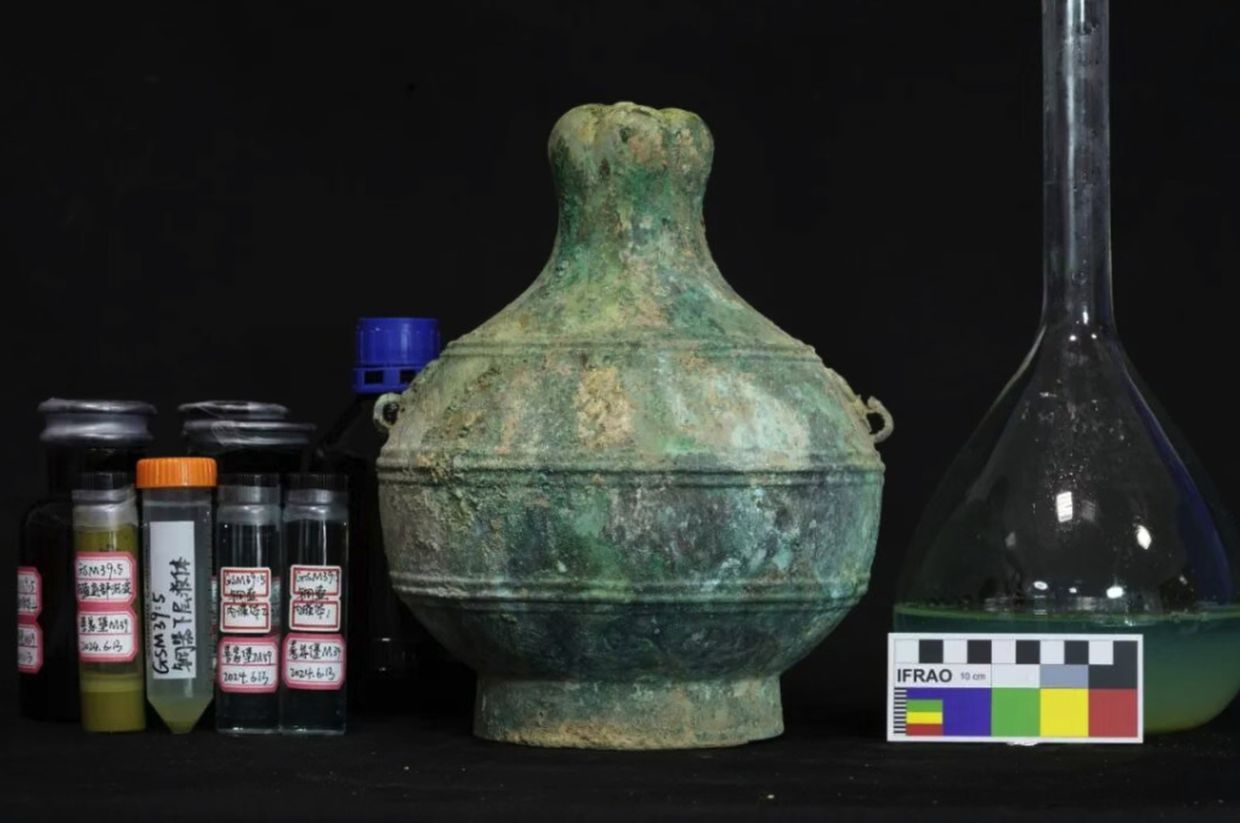
A stunningly intact bronze wine vessel unearthed near China's Great Wall has provided researchers with rare, detailed evidence of how ancient civilisations crafted alcoholic beverages over two millennia ago. The discovery at Shanjiabao cemetery, situated just two kilometres from the Warring States Qin Great Wall in Ningxia, represents the most comprehensive archaeological record of wine production from the Qin period yet documented in China. The vessel itself, a garlic-head-shaped pot characteristic of Qin culture, still contained approximately 3,740 millilitres of ancient liquid residue that had survived sealed within the tomb for more than 2,300 years, according to findings published in the June issue of the Journal of Archaeological Science.
The remarkable preservation of this wine owes everything to sophisticated sealing techniques employed by ancient craftspeople. The bronze pot utilised a double-layer system that combined an inner textile lining with an outer coating of organic clay, creating an airtight environment that protected its precious contents across centuries. Wang Xiaoyang, the head of the Shanjiabao cemetery archaeological project at the Ningxia Institute of Cultural Relics and Archaeology, described the find as the most information-rich wine relic from the Qin state period ever made public in China. The discovery emerged from extensive excavations at the cemetery site, where archaeologists uncovered 183 tombs spanning the Warring States period, with 179 identified as belonging to Qin culture, suggesting the location served as a public burial ground for garrison troops and their families stationed at fortifications along the Great Wall.
The region surrounding the excavation area itself holds considerable historical significance within Chinese military and cultural tradition. The 170-kilometre stretch of the Qin Great Wall in this region contains numerous forts, castles, and defensive outposts of varying sizes, where soldiers and their families lived in fortified communities during the Warring States period. This context helps explain why a soldier or garrison member would be buried with such a treasured possession—wine vessels held both practical and ceremonial importance in Qin burial practices, often accompanying the deceased as provisions for the afterlife. The distribution of these 183 tombs along this critical defensive corridor provides archaeological evidence of how these frontier communities were structured and supplied during antiquity.
To unlock the secrets of this ancient brew, researchers conducted exhaustive chemical analysis of the liquid residue. Scientists identified a total of 24 distinct compounds within the sample, including organic acids and their derivatives, amino acids and derivatives, and carbohydrates. The specific distribution pattern of organic acids closely matched that found in artificially aged yellow wine, definitively confirming that the liquid represented a grain-based alcoholic beverage rather than a fruit wine such as grape wine. This distinction matters considerably for understanding regional brewing traditions, as different parts of ancient China developed distinct approaches based on available agricultural resources.
Particular attention focused on identifying the primary grain used in this ancient winemaking process. Through careful starch residue analysis, researchers determined that over 92 per cent of the starch originated from broomcorn millet, a hardy grain crop well-suited to the northern climate and soil conditions where the Great Wall's garrison communities were located. This finding aligns with broader patterns of grain utilisation across northern China during the Warring States period, when millet and foxtail millet dominated the brewing industry in contrast to the rice-based fermentation practices prevalent in southern regions. The dominance of broomcorn millet in this particular vessel demonstrates how environmental geography directly shaped ancient manufacturing practices and dietary traditions.
China's long history as one of the world's earliest centres of alcoholic beverage production has long fascinated researchers studying the origins of fermentation technology. Archaeological discoveries of ancient alcoholic residues across Chinese sites have sparked intensive scholarly interest in how brewing techniques evolved and diversified across different regions and time periods. However, most previous discoveries provided limited chemical data or had deteriorated too extensively to permit detailed analysis. This Shanjiabao find offers an unusually complete window into ancient production methods because the sealed vessel protected its contents from oxidation and contamination. Researchers promptly sent samples to Northwest University for additional sophisticated analysis, recognising the unique opportunity this discovery presented for understanding Qin-era craftsmanship.
The vessel's discovery fills a significant gap in archaeological understanding of how the Ningxia region's inhabitants produced wine during the Warring States period of the Qin state. Prior to this excavation, evidence of winemaking practices in this specific area and era remained fragmentary and incomplete. The detailed chemical composition now available from this find provides baseline data against which other ancient beverages and residues can be compared, potentially illuminating previously unclear patterns of trade, cultural exchange, and technological development across frontier regions. The implications extend beyond mere historical curiosity—understanding how ancient peoples adapted brewing techniques to local agricultural products offers perspective on how human communities have historically responded to environmental constraints through innovation.
Beyond its scientific value, the vessel's discovery illuminates the personal dimensions of life along China's ancient frontier. The careful burial of this wine-filled bronze pot alongside its Qin occupant—whether soldier or administrator—suggests that this individual held enough status or wealth to merit such an elaborate grave good. The selection of his most prized wine vessel for funerary purposes indicates deep cultural attitudes about companionship in the afterlife and the importance of refined consumption practices even in remote garrison communities. The fact that his family took care to preserve this vessel for burial demonstrates how valued such objects were across Qin society, from urban centres to outlying military posts.
For Malaysian and Southeast Asian readers, this archaeological discovery offers instructive parallels with the region's own ancient brewing traditions. Many Southeast Asian cultures similarly developed grain-based fermented beverages suited to local climate and agriculture, creating distinct regional variations just as northern and southern China did. The sophisticated preservation and analytical techniques employed at Shanjiabao represent the kind of rigorous scientific archaeology increasingly applied across Asia to recover knowledge of ancient technologies and lifeways. As countries throughout Southeast Asia continue developing their own archaeological research capacities, studies of how ancient peoples engineered solutions to preservation problems—as the Qin craftspeople did with their double-layer sealing technique—offer valuable methodological and practical lessons.
The broader significance of this discovery lies in its demonstration that careful excavation and modern scientific analysis can recover remarkably detailed information from ancient remains, even after millennia of burial. The 2,300-year-old wine vessel serves as testimony not only to Qin brewing expertise but to the ingenuity of ancient sealing and preservation methods that rival modern food storage technology in their effectiveness. As archaeological teams across Asia adopt increasingly sophisticated analytical techniques, such discoveries will continue to reshape understanding of how ancient peoples lived, worked, and innovated in response to their environments and circumstances.

