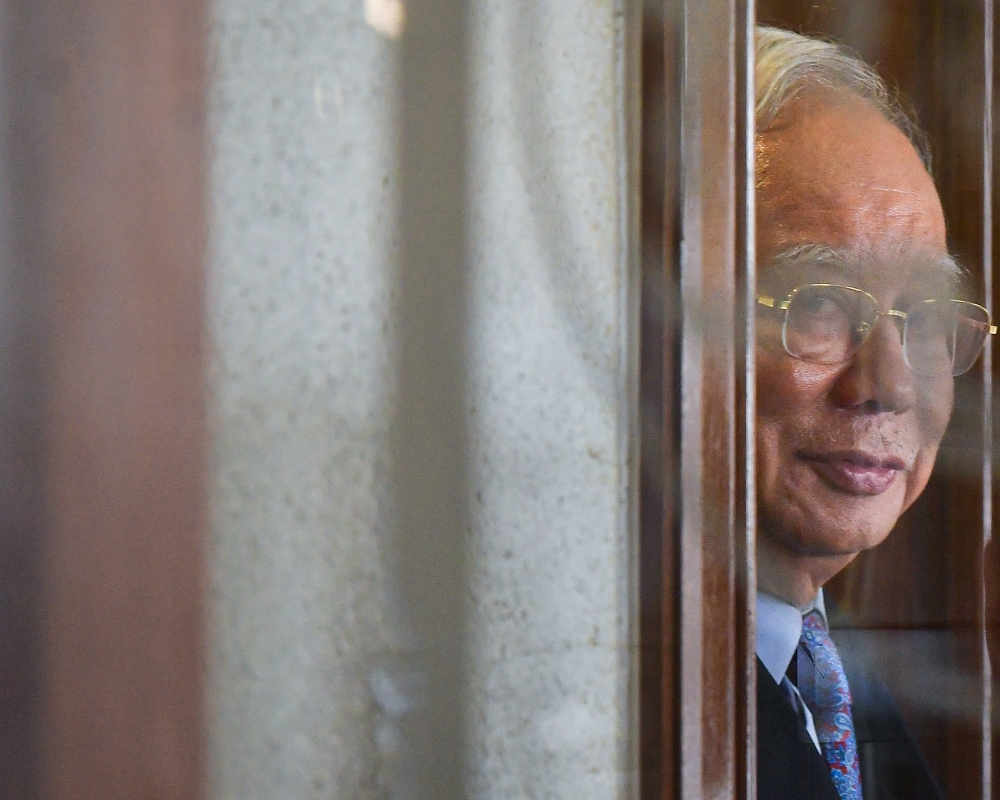
A critical gap has emerged in the investigation into whether former Prime Minister Najib Razak properly accounted for a US$620 million payment he claimed to have returned to 1Malaysia Development Berhad, with a High Court hearing yesterday revealing that the lead financial fraud investigator never verified whether the funds were simply rerouted rather than genuinely recovered. The admission raises significant questions about the thoroughness of the probe into one of the world's largest financial scandals and highlights potential vulnerabilities in the prosecution's case as Najib faces ongoing legal proceedings related to his administration's misuse of the sovereign wealth fund.
Financial fraud investigator Richard Templema provided testimony that underscores a methodological shortcoming in how authorities traced the movement of funds allegedly misappropriated from 1MDB. His acknowledgment that he did not investigate whether the $620 million payment, which Najib claimed had been returned to the fund, was subsequently transferred elsewhere or hidden through additional financial manoeuvres suggests that crucial investigative steps may have been overlooked. This gap in due diligence could have profound implications for understanding the true scope and destination of diverted 1MDB money, particularly if substantial sums were merely moved between accounts rather than genuinely recovered.
The 1MDB scandal, which erupted publicly in 2015, has become emblematic of the challenges facing Malaysia's institutions in recovering stolen state assets. Approximately US$4.5 billion disappeared from the sovereign wealth fund between 2009 and 2015 under Najib's tenure as Prime Minister. Beyond Malaysia's borders, the scandal triggered investigations across multiple jurisdictions including the United States, Singapore, and Switzerland, making it a watershed moment for international financial crime enforcement. The failure to comprehensively track even a single major repatriation claim demonstrates the complexity of unravelling transactions that may have involved multiple countries and sophisticated concealment techniques.
Najib has maintained that he never intended to steal from 1MDB, and portions of the money have indeed been recovered through various legal mechanisms. However, the investigator's testimony suggests that even when supposed repayments occur, the authenticity and finality of such restitution may not have been rigorously established. The distinction between genuine recovery and mere recycling of funds is not merely technical; it fundamentally affects the accuracy of assessments regarding how much has actually been retrieved and whether significant amounts remain hidden or continue circulating through financial networks.
For Malaysian readers, this development carries several implications beyond the immediate legal proceedings against Najib. The investigation's apparent methodological gaps raise broader concerns about Malaysia's capacity to pursue complex financial crime cases and recover state assets. As the country continues developing its regulatory infrastructure and forensic accounting capabilities, the 1MDB experience provides sobering lessons about the resources and expertise required to comprehensively investigate large-scale corruption involving international financial transactions.
The High Court proceedings continue to examine various aspects of the 1MDB money trail, including the routes through which funds were allegedly transferred to associates and entities overseas. Najib's legal team has mounted vigorous defences challenging the sufficiency of evidence and the reliability of investigative procedures, and Templema's admission provides them with additional ammunition to question the prosecution's case comprehensiveness. Each such concession compounds existing concerns about whether the authorities have fully mapped the entire network of transactions and beneficiaries involved in the 1MDB scheme.
From a regional perspective, the case has become instructive for Southeast Asian governments grappling with governance challenges and corruption. The scope of the 1MDB diversion demonstrated how vulnerable even sovereign wealth funds can be to misappropriation when internal controls, corporate governance, and oversight mechanisms are inadequate. The ongoing legal complexities also underscore the difficulties confronting regulators when attempting to recover assets that have been dispersed internationally through multiple financial instruments and corporate entities.
The testimony from Templema also reflects practical constraints that investigators often face when pursuing cross-border financial crimes. Obtaining comprehensive records from foreign financial institutions, coordinating with overseas authorities, and establishing clear audit trails across multiple jurisdictions demands sustained diplomatic effort and sophisticated technical capability. Malaysia's performance in this domain has improved considerably since 2015, yet the gaps evident in the investigation into the $620 million payment suggest that room for enhancement remains.
Looking forward, the outcome of Najib's ongoing court cases will partly depend on whether prosecutors can overcome such investigative shortcomings through other evidence and testimony. The case serves as a benchmark for how effectively Malaysia's judiciary and enforcement agencies can hold high-level officials accountable for misconduct involving state resources. Whether the High Court ultimately finds sufficient grounds to convict, or whether investigative deficiencies contribute to acquittals or reduced sentences, will have significant ramifications for public confidence in the rule of law and Malaysia's commitment to anti-corruption enforcement.

