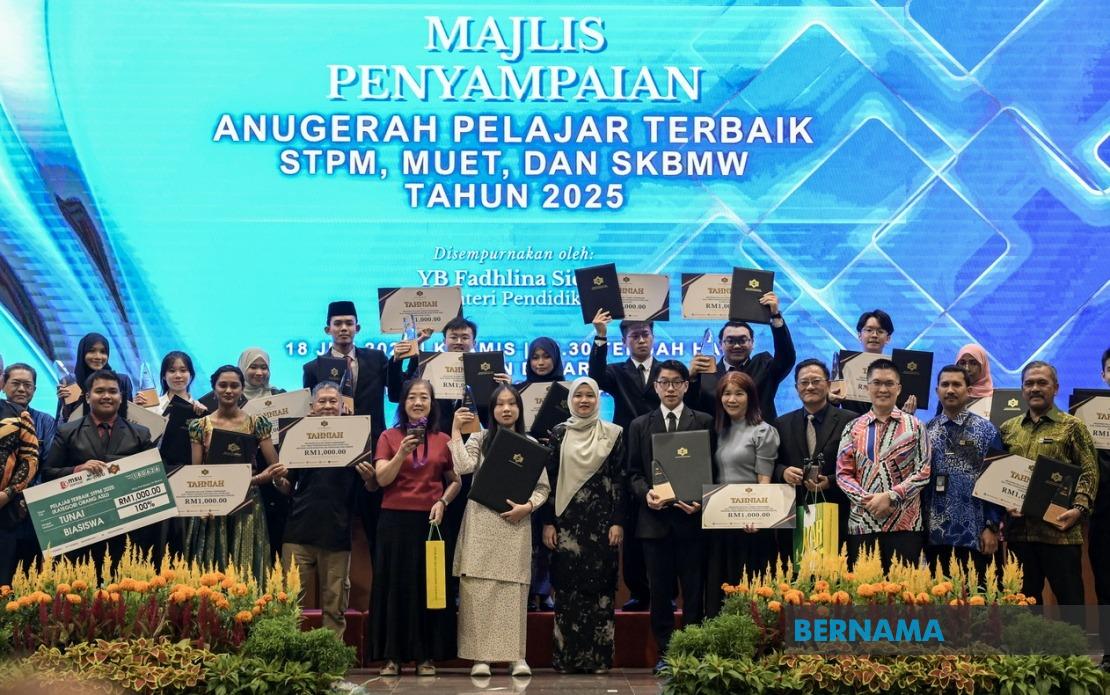
Malaysia's Education Ministry has unveiled a fresh scholarship scheme designed to reward the nation's top-performing Form Six students and reinvigorate confidence in the pre-university education system. Education Minister Fadhlina Sidek announced that 18 exceptional STPM 2025 students will be awarded tuition fee sponsorships by public universities across the country, a programme she characterised as a landmark step in nurturing talent and strengthening the Form Six ecosystem.
The initiative represents a coordinated commitment from Malaysia's public higher education institutions to directly support academic excellence at the secondary level. Each participating public university will offer Bachelor's degree scholarships to the highest-achieving STPM 2025 candidates, creating a clear pathway from pre-university study to degree-level education. This approach signals institutional confidence in the STPM qualification and demonstrates the sector's investment in attracting motivated students to the Form Six route.
Fadhlina made the announcement during a formal presentation ceremony honouring top performers in the 2025 STPM, the University of Malaysia English Test (MUET), and the Certificate of Proficiency in Malay for Foreigners (SKBMW) at the Malaysian Examinations Council building in Kuala Lumpur. The event drew attendance from Deputy Education Minister Wong Kah Woh, Malaysian Examinations Council chairman Prof Datuk Dr Md Amin Md Taff, and Education Malaysia's director-general Datuk Dr Mohd Azam Ahmad, underscoring the significance placed on the programme within government circles.
The scholarship scheme forms part of a broader, multi-pronged strategy aimed at revitalising the Form Six sector, which has faced competition from other pre-university pathways in recent years. Beyond financial support, the government has rolled out complementary measures to make the Form Six experience more attractive and accessible to secondary school leavers. These initiatives include expanding the number of Form Six Colleges nationwide, equipping classrooms with modern smartboards to enhance teaching quality, providing early schooling assistance to eligible students, and distributing MADANI Book Vouchers to support educational materials and resources.
Academic performance data released alongside the announcement provides encouraging signals about the trajectory of STPM education in Malaysia. The national Overall Grade Point Average (CGPA) for STPM 2025 reached 2.88, a measurable improvement from 2.85 recorded in the previous year. This upward movement, though modest, suggests that the cumulative effect of policy interventions and institutional efforts is beginning to yield positive results at the aggregate level. Fadhlina attributed the improvement to the strengthened ecosystem and infrastructure now in place, expressing confidence that the trend will continue as additional support structures take root.
From a Malaysian policy perspective, this development reflects growing recognition that attracting high-achieving students to Form Six requires both aspirational pull and tangible incentives. The scholarship programme directly addresses a key concern among top-performing secondary school students: the financial burden of continuing education. By removing tuition costs for the most academically accomplished, the scheme targets precisely the cohort most likely to have multiple educational options and thus most susceptible to choosing alternative pathways such as private colleges or overseas institutions. The financial backing thus serves as a meaningful competitive advantage for public universities in recruiting talent.
The timing of the announcement carries strategic significance within Malaysia's broader educational discourse. In recent years, Form Six enrolment has faced headwinds as international examination systems like A-levels and the International Baccalaureate have gained market share, and as pathway options through matriculation and diploma programmes have expanded. By creating highly visible opportunities for academic recognition and financial reward, the government aims to reposition Form Six as the premier choice for academically ambitious students. The public visibility of the 18 scholarship awardees and their subsequent trajectories will serve as powerful messaging about the value and prestige associated with the STPM pathway.
For Malaysian students deliberating their post-secondary options, the scholarship programme fundamentally alters the calculus in favour of Form Six. A full tuition sponsorship from a public university significantly reduces the financial risk associated with choosing the pre-university route, which typically lasts two years before degree-level study. This is particularly consequential for merit-based students from middle and lower-income households who might otherwise feel constrained to pursue cheaper diploma or vocational alternatives. The explicit recognition of academic excellence through scholarship allocation also creates clearer signals about what excellence looks like and which institutions value it most highly.
Regionally, Malaysia's approach aligns with broader Southeast Asian trends toward competitive scholarship schemes designed to strengthen domestic pre-university pathways. Singapore and Thailand have comparable programmes, and Malaysia's initiative positions the country as similarly committed to nurturing high-potential talent within its own education system rather than ceding top students to international competitors. The scheme implicitly acknowledges that sustained economic competitiveness requires developing a strong domestic pipeline of highly educated talent, beginning with identification and support at the pre-university stage.
The scholarship programme also reflects evolving thinking about the public university sector's role in talent development. Rather than viewing public universities primarily as admission-stage institutions, the scheme positions them as active participants in the secondary education ecosystem, with responsibility for identifying and supporting promising talent earlier in the educational pipeline. This upstream engagement potentially strengthens the relationship between Form Six colleges and public universities, creating feedback loops that improve curriculum alignment and student preparation.
For parents and educators navigating educational choices in Malaysia, the announcement represents a tangible policy shift toward greater opportunity. The existence of 18 substantive scholarships—covering full tuition at public universities—creates real prizes that merit-based selection processes can identify and allocate. The visible, branded nature of these awards also enhances the prestige of Form Six generally, as securing such recognition becomes a legitimate marker of educational achievement comparable to other honours and distinctions students pursue.
Looking forward, several questions will shape the ultimate impact of this initiative. The sustainability of the scheme across multiple cohorts will determine whether it fundamentally reshapes student choices or remains a one-off intervention. The distribution of scholarships across public universities and across different degree programmes will reveal whether the scheme genuinely opens pathways to high-demand fields or concentrates support in particular areas. Most importantly, the career outcomes and subsequent contributions of scholarship recipients will ultimately validate whether the investment in recognising and supporting STPM excellence translates into the long-term competitiveness and innovation capacity the government ultimately seeks to achieve.

