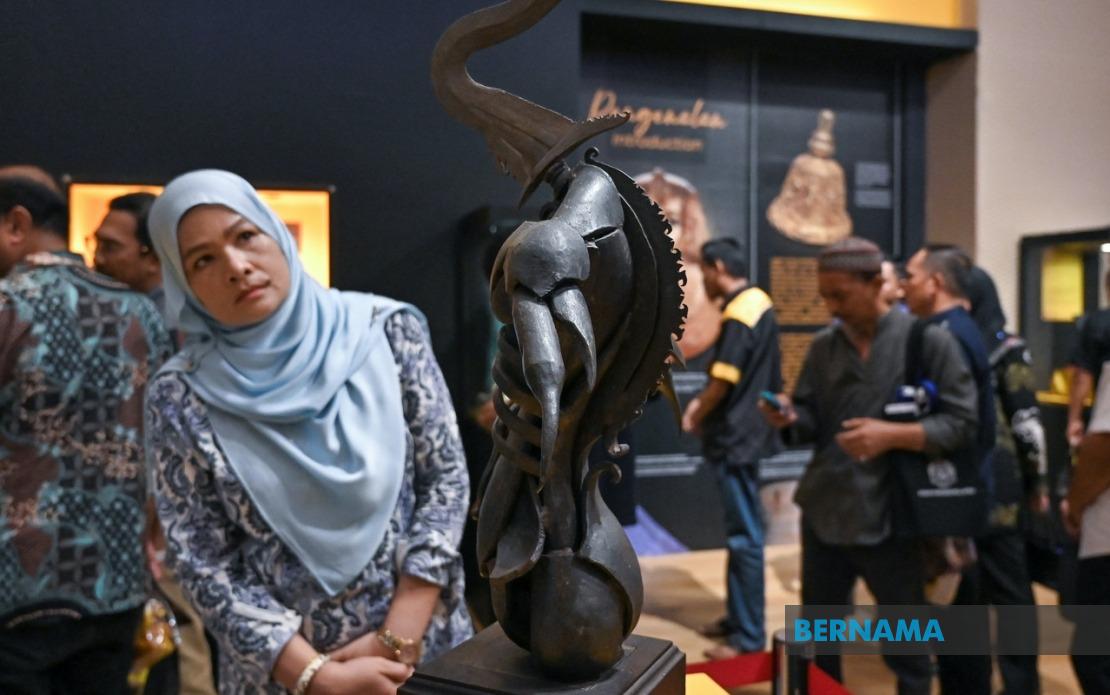
The Perak Museum in Taiping has opened an ambitious exhibition bringing together 140 metal heritage pieces that illuminate the spiritual, political and artistic dimensions of metalwork within Malay culture. Titled 'Magic and Metal: Spirit, Power and Art', the showcase runs from June 1 through December 31 and represents a rare opportunity to examine how metal artefacts functioned as repositories of meaning far beyond their practical applications in the Malay world.
Museum director Mohd Nasrulamiazam Mohd Nasir explained that the exhibition's conceptual framework rests on three interconnected themes. The 'spirit' dimension explores metallurgical traditions imbued with mystical properties and symbolic resonance. The 'power' element examines how metal objects—particularly weapons and regalia—embodied political authority and social hierarchy within traditional Malay kingdoms. Finally, the 'art' component celebrates the aesthetic sophistication and technical mastery demonstrated by metalworkers across different periods and regions.
What distinguishes this exhibition is its collaborative curatorial approach. Rather than relying solely on the museum's existing holdings, organisers assembled pieces from multiple sources to create a more comprehensive narrative. These partnerships include sculpture collections from Raja Syahriman Raja Aziddin, silver ornaments held by Yayasan Al-Amin, and an impressive array of traditional Malay weapons belonging to collector Nor Azahar Ibrahim. This strategy significantly enriches the exhibition's scope and allows visitors to encounter materials that rarely appear in public settings.
Among the exhibition's most significant pieces are artefacts with royal provenance that illuminate the material culture of Perak's sultanate. A nineteenth-century Malay traditional weapon featuring an ornate snail-shell hilt once belonged to Sultan Abdullah Muhammad Shah II, the 26th Sultan of Perak, and stands as testimony to the craftsmanship lavished on objects associated with royal power. An eighteenth-century Bugis warrior's suit of armour represents another geographical and cultural dimension, illustrating how metalworking traditions extended throughout the maritime Malay world. A decorative spoon and fork set that belonged to Raja Laut Ibni Sultan Muhammad Shah, second son of the third Sultan of Selangor, demonstrates the integration of fine metalwork into courtly domestic life.
The Department of Museums Malaysia, whose director-general Datuk Kamarul Baharin A. Kasim formally opened the exhibition, positioned the display within a broader institutional mission. Museums across Malaysia are increasingly emphasising their roles as centres of knowledge creation, scholarly research, and active heritage conservation rather than merely warehouses of objects. This exhibition exemplifies that shift by encouraging visitors to contemplate deeper questions about how Malay societies invested objects with meaning and how material culture reinforced social structures.
Visitor engagement has been encouraging thus far. The museum initially projected attracting 100,000 visitors across the exhibition's seven-month run, with nearly 20,000 already passing through in the opening weeks. This robust attendance suggests strong public interest in heritage exhibitions that go beyond descriptive cataloguing to offer interpretive frameworks for understanding cultural history.
For Malaysian audiences, the exhibition carries particular significance in demonstrating the intellectual sophistication and technical achievement of pre-modern Malay civilisations. At a time when regional historical narratives sometimes privilege European technological advancement, displays emphasising indigenous metalworking traditions, ceremonial weaponry, and courtly material culture help restore balance to historical understanding. The gathering of pieces from dispersed private and institutional collections also raises important questions about heritage preservation and the role of public museums in safeguarding cultural memory.
The focus on metal as a cultural medium is especially revealing. Unlike textiles or organic materials that deteriorate over centuries, metal objects survive to testify to past societies' values and capabilities. By examining how Malay craftspeople worked precious and base metals, how they incorporated mystical symbolism into functional objects, and how royal and warrior elites deployed metalwork to communicate authority, the exhibition provides tangible evidence of sophisticated aesthetic and philosophical systems.
The exhibition's seven-month duration through the end of the year provides sustained opportunity for school groups, researchers, collectors and heritage enthusiasts to engage with these materials. The Perak Museum's location in Taiping, a city with deep historical roots in colonial Malaya's tin-mining economy, adds resonance to an exhibition celebrating metal's cultural significance. Visitors will encounter objects that bridge pre-colonial, colonial and modern periods, tracing continuities and transformations in how Malaysians have valued and worked with metal across centuries.

