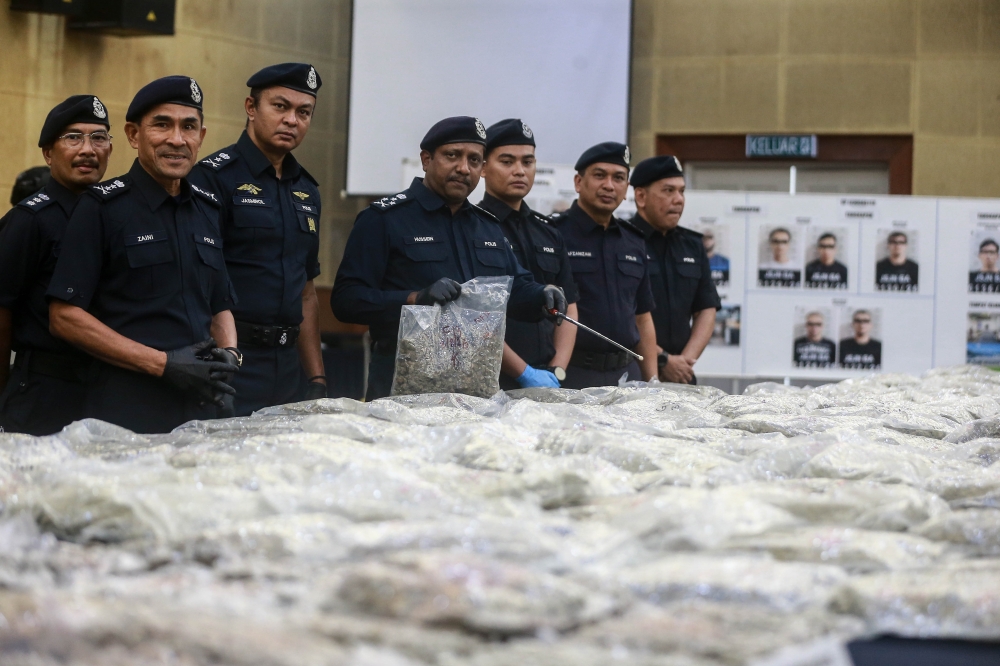
Malaysian authorities have revealed a troubling trend in international drug trafficking, with 14 of the country's citizens arrested abroad on suspicion of orchestrating smuggling operations through Kuala Lumpur International Airport (KLIA) since the beginning of the year. The disclosure underscores how Southeast Asia's busiest airport has become a focal point for transnational criminal networks seeking to move contraband across global boundaries, even as law enforcement agencies intensify their counter-narcotics efforts.
The revelation comes as police continue to grapple with the persistent challenge of dismantling drug trafficking rings that leverage Malaysia's strategic geographic location and its position as a regional transportation hub. KLIA's significance as both a passenger and cargo gateway makes it particularly vulnerable to exploitation by organised crime groups, which frequently employ sophisticated logistics and recruitment methods to move narcotics to lucrative markets in Europe, North America, and elsewhere.
These arrests represent merely the visible component of a much larger problem. The individuals apprehended overseas often serve as operatives at the ground level of sprawling criminal enterprises that command resources and networks spanning multiple continents. Many are young Malaysians who have been recruited through social media platforms or by existing gang members, often promised substantial financial rewards for their participation in what they may have been led to believe were low-risk endeavours.
The involvement of Malaysian nationals in drug smuggling operations abroad carries significant diplomatic and law enforcement implications for the country. When citizens are arrested in foreign jurisdictions, Malaysia's relationship with those nations can be affected, particularly concerning judicial cooperation and extradition matters. These incidents also damage the nation's international reputation and complicate trade and travel negotiations in an increasingly security-conscious global environment.
KLIA's vulnerability stems from multiple factors unique to its operational environment. The airport processes millions of passengers and substantial volumes of cargo annually, creating countless opportunities for concealment and diversion. The diversity of routing options, coupled with the facility's role as a major regional transit point, means that contraband can be embedded within legitimate supply chains or passenger baggage with relative ease. Additionally, corruption or negligence at various points along the security chain can facilitate illegal activities.
The method by which these smuggling networks operate has evolved considerably in recent years. Rather than relying on traditional couriers carrying drugs in luggage, organised groups now employ more sophisticated approaches including the use of freight forwarding services, commercial shipping containers, and mail services. Some networks have established front companies to legitimise their operations, while others exploit the complexities of international postal systems and express delivery networks.
From a Malaysian perspective, these arrests abroad signal that the country's drug problem extends far beyond domestic consumption and distribution. The nation has become integrated into global narcotics supply chains, with local residents functioning as key nodes in international trafficking operations. This globalisation of Malaysia's drug crisis means that addressing the issue requires not merely domestic law enforcement efforts but also sustained international cooperation and intelligence sharing.
The police disclosure also highlights the effectiveness of foreign law enforcement agencies in disrupting these operations. Countries in Europe, North America, and other regions have developed sophisticated capabilities for identifying and apprehending drug smugglers, including international cooperation through Interpol and bilateral agreements. When Malaysian nationals are caught attempting to introduce drugs into these jurisdictions, it often triggers investigations that can eventually lead authorities back to the criminal networks operating from within Malaysia.
Prevention and interdiction at KLIA itself remains critical. Authorities have expanded their use of advanced screening technologies, intelligence analysis, and canine units to detect contraband. However, the ongoing challenge lies in balancing security imperatives with the need to maintain operational efficiency and passenger throughput at one of Asia's busiest aviation hubs. This tension between security and commerce creates inevitable vulnerabilities that sophisticated criminal organisations continue to exploit.
The arrest pattern also reflects broader regional dynamics in Southeast Asia's drug trade. Malaysia's location along major trafficking routes linking source countries in the Golden Triangle and Golden Crescent to consumer markets in developed nations makes it almost inevitably susceptible to transit smuggling. The ease of travel within ASEAN and the region's relatively porous borders have historically facilitated movement of drugs and personnel, though member states have stepped up cooperation in recent years.
For Malaysian citizens, the consequences of involvement in international drug trafficking are severe. Many countries maintain strict drug laws with mandatory sentences and substantial prison terms. The individuals apprehended face not only criminal prosecution abroad but also potential repatriation and prosecution in Malaysia, where they would be subject to the country's own harsh penalties for narcotics offences. The social and family disruption caused by such arrests extends far beyond the individuals involved.
Moving forward, addressing this dimension of Malaysia's drug problem requires a multifaceted approach combining better intelligence capabilities, enhanced airport security, international cooperation, and community engagement to discourage young Malaysians from participating in these networks. The fact that 14 citizens have been arrested overseas in recent months underscores the urgent need for these comprehensive countermeasures to take root and produce measurable results in disrupting trafficking operations.

