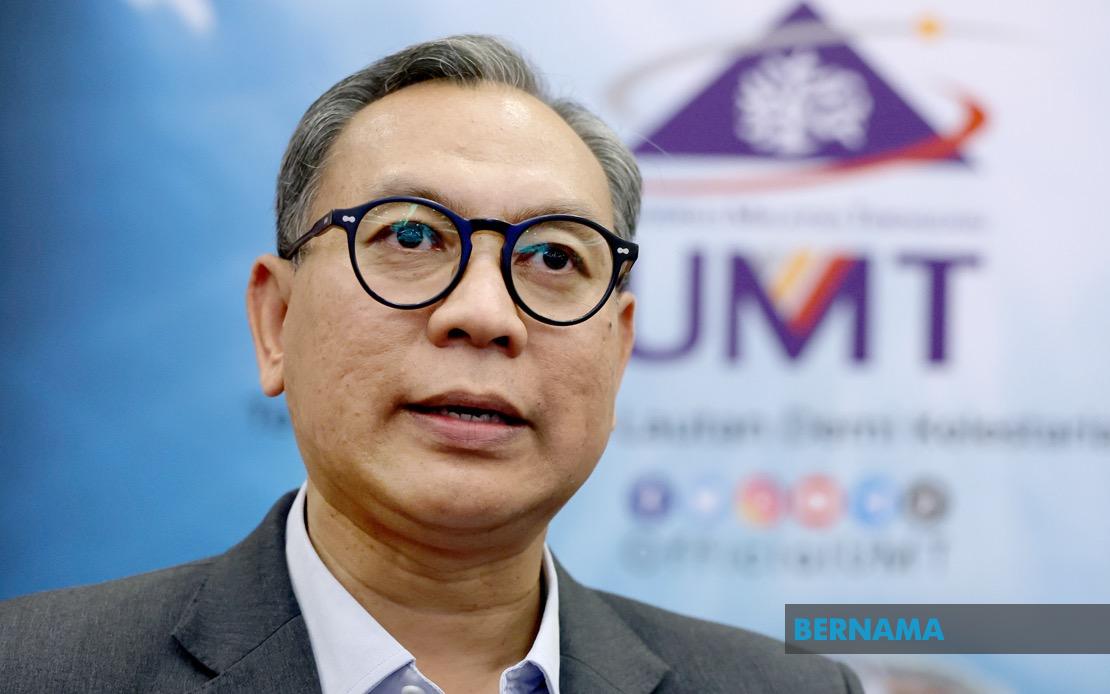
Universiti Malaysia Terengganu (UMT) is hosting the 1st International Conference on Microplastics 2026 (ICM2026) in Putrajaya, bringing together 126 participants spanning researchers, scientists, policy officials, corporate representatives, and environmental advocates from Australia, Canada, China, India, Indonesia, Japan, South Korea, the Philippines, and Thailand alongside Malaysian contingents. The two-day gathering represents a significant regional effort to collectively examine one of the most pressing environmental threats of contemporary times: the pervasive contamination of ecosystems by microplastics.
According to UMT Vice-Chancellor Prof Dr Mohd Zamri Ibrahim, the conference reflects the institution's positioning as a centre of excellence in marine, maritime, and aquatic research. Beyond purely academic pursuits, he emphasised that the conference demonstrates UMT's commitment to generating knowledge that directly informs environmental policy, supports conservation initiatives, and grounds governance decisions in rigorous scientific evidence. This alignment between research and practical application has become increasingly vital as policymakers across Asia grapple with managing the microplastics crisis.
The university has leveraged its Microplastics Research Interest Group (MRIG) and consultancy arm, UMT Consultancy Services Sdn Bhd (UMTCS), to coordinate the gathering. This institutional arrangement signals how universities in the region are transitioning from isolated research operations towards integrated platforms that bridge academia, business, and governance—a structural shift that has proven essential for addressing transnational environmental challenges where no single actor possesses the complete toolkit for solutions.
Microplastic contamination has emerged as a borderless crisis demanding urgent international attention. These microscopic plastic particles now pervade oceans and freshwater bodies, accumulate in bottom sediments, and infiltrate food chains, eventually reaching human populations. Scientific evidence increasingly demonstrates that microplastics disrupt biodiversity equilibrium, destabilise ecosystem functioning, and pose documented risks to human health through ingestion and bioaccumulation. For a Southeast Asian region dependent on marine resources for food security, protein supplies, and economic livelihoods, this contamination presents existential stakes that extend far beyond environmental metrics.
Prof Mohd Zamri underscored that addressing microplastic pollution requires more than incremental improvements to existing frameworks. Instead, stakeholders must embrace coordinated, multi-sectoral strategies that integrate scientific discovery with practical management, encompassing researchers from diverse disciplines, policymakers crafting regulations, industries redesigning production and disposal processes, and communities whose daily practices either exacerbate or mitigate the problem. The conference structure reflects this ecosystem perspective, assembling expertise across multiple domains rather than congregating specialists within traditional academic silos.
During the two-day proceedings, participants will disseminate recent research outcomes and deliberate on critical dimensions of the microplastics problem. Sessions will address emerging detection and measurement technologies, methodologies for environmental surveillance across different ecological contexts, mechanisms through which microplastics inflict damage on biological systems and human populations, practical strategies for reducing pollution at source and managing existing contamination, and the evolving landscape of regulatory responses worldwide. This comprehensive agenda acknowledges that solving the microplastics challenge demands simultaneous progress across prevention, detection, remediation, and governance fronts.
Prof Mohd Zamri expressed confidence that ICM2026 will catalyse tangible advances in regional research capacity and international collaboration. By convening researchers across borders, the conference creates opportunities for establishing joint research initiatives that pool resources and expertise, generating co-authored publications that amplify visibility within global scientific discourse, facilitating researcher and student exchanges that distribute knowledge across institutions, and upgrading analytical infrastructure and capabilities—particularly significant for developing economies in Southeast Asia where sophisticated laboratory facilities remain concentrated in wealthier nations.
Beyond immediate academic outcomes, the conference architecture creates space for building sustainable partnerships linking universities with industries and community organisations. Such alliances prove essential for translating laboratory findings into scalable interventions—whether through developing alternative materials to replace conventional plastics, designing manufacturing processes that minimise microplastic generation, creating waste management systems that capture particles before they reach natural environments, or implementing public education campaigns that shift consumer behaviour.
For Malaysia and neighbouring countries, the timing of this inaugural conference carries particular significance. The region produces substantial quantities of plastic waste, operates major petrochemical industries, depends heavily on marine ecosystems for sustenance and economic activity, and yet has historically received limited international scientific attention relative to microplastics research concentrated in Europe and North America. By hosting this gathering, UMT positions Malaysia as a convening centre for Asia-Pacific expertise on this critical issue, potentially establishing the foundation for ongoing regional cooperation that better reflects local environmental realities and development contexts.
The composition of participating nations—spanning developed economies, emerging markets, and developing countries—reflects how microplastic pollution transcends traditional development hierarchies. Wealthy industrialised nations generate substantial plastic waste but have invested in research and infrastructure; developing nations often experience disproportionate exposure without equivalent scientific capacity or regulatory frameworks. This conference therefore represents an opportunity for knowledge transfer and technical assistance that could strengthen governance responses across the region.
UMT's initiative also signals growing recognition among Southeast Asian universities that environmental stewardship demands institutional leadership beyond teaching and incremental scholarship. By organising international conferences, establishing research consortia, and convening policymakers alongside academics, universities can help catalyse the integrated responses that microplastic pollution demands. The success of ICM2026 may thus establish a template for regional cooperation on other transboundary environmental challenges—from marine litter and ocean acidification to tropical deforestation and air quality management.

