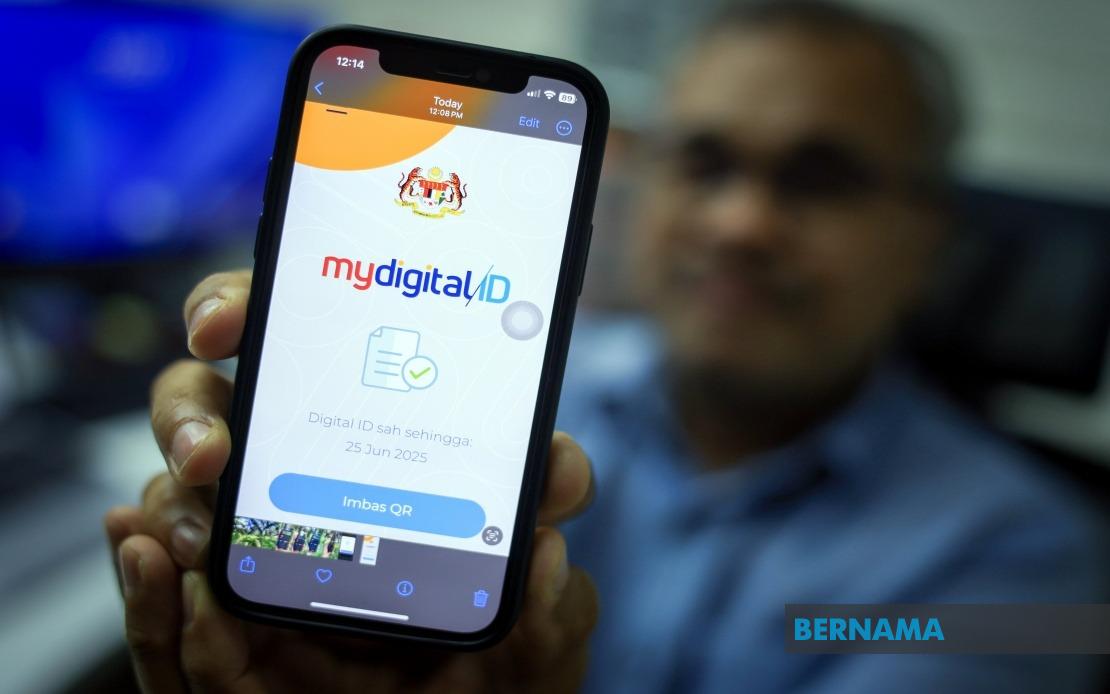
Deputy Prime Minister Datuk Seri Dr Ahmad Zahid Hamidi has announced a significant milestone in Malaysia's digital transformation agenda, revealing that 12 million citizens have registered for MyDigital ID as of the end of June. The figure underscores the growing adoption of the government's centralised digital identity framework, which aims to streamline access to online government services through a single authentication mechanism. The scale of uptake reflects the government's ambitious push to create an integrated digital ecosystem for public service delivery across the country.
Beyond the registration numbers, the government has recorded a substantial volume of digital transactions, with 16 million recorded activities involving registrations, renewals and cancellations of digital identities. This transactional metric provides insight into the active usage of the platform and suggests that the MyDigital ID scheme is gaining traction not merely as a registration exercise but as a functioning component of citizens' engagement with government services. For Malaysian residents and businesses navigating multiple government platforms, the ability to consolidate digital credentials represents a meaningful simplification of bureaucratic processes.
The government's strategy centres on deploying MyDigital ID as the primary single sign-on mechanism for online government services through coordinated implementation at both federal and state levels. This tiered approach recognises Malaysia's federal structure and seeks to create consistency across different government agencies while respecting state autonomy in service delivery. By establishing a unified authentication standard, the government aims to reduce duplication, enhance security and improve user experience across the fragmented landscape of existing government portals and platforms.
A pivotal directive issued by the Chief Secretary to the Government on January 14, 2025, mandated that all ministries, federal departments, statutory bodies, state secretaries and local authorities implement the single sign-on system using MyDigital ID. This top-down enforcement mechanism signals the government's determination to move beyond voluntary adoption and create binding compliance across the entire public service machinery. The directive transforms MyDigital ID from an optional convenience into an institutional requirement, which should accelerate integration timelines and standardise procedures across diverse agencies.
As of June 25, 2026, the integration effort has achieved tangible results, with 114 online government services now connected to the MyDigital ID platform. This portfolio encompasses high-traffic services including MyJPJ, the vehicle licensing system; MyPTPTN, for loan repayment matters; SPA9, the civil service recruitment portal; and the Royal Malaysia Police's MyBayar payment platform. These are precisely the services Malaysians interact with frequently, making their integration particularly valuable in reducing the need to maintain separate usernames and passwords across multiple platforms.
The MyGOV Malaysia platform, developed by the National Digital Department (JDN), serves as a central hub through which citizens can access integrated government services using their MyDigital ID credentials. This architecture represents a modernisation approach in which authentication and service delivery are decoupled but interoperable, allowing agencies flexibility in backend operations while maintaining a consistent user interface. For Malaysian citizens, the resulting experience should feel increasingly seamless as they navigate different government transactions without repeated login processes.
At the subnational level, state governments have begun their own integration efforts, with 19 state-level online applications already connected to MyDigital ID as of the reporting period. An additional 28 state applications remain in development, indicating that the digital transformation momentum extends beyond federal agencies into local service delivery points. This expansion is particularly significant for Malaysians in smaller towns and rural areas, where state-level services often represent their primary touch points with government.
The expansion of MyDigital ID integration carries substantial implications for Malaysia's broader digital economy and cybersecurity posture. As more government services concentrate behind a single authentication gateway, the security architecture protecting that gateway becomes critically important. Any vulnerability in MyDigital ID authentication could potentially expose numerous government services simultaneously, making robust security infrastructure and regular auditing essential components of the rollout strategy. The government's capacity to maintain public trust in the system depends heavily on its ability to protect the centralized credentials that increasingly unlock access to sensitive administrative functions.
For businesses and entrepreneurs in Malaysia, the integration of government services under MyDigital ID creates operational efficiencies in compliance and administrative processes. Company representatives managing multiple government relationships can consolidate their digital credentials and reduce the administrative overhead associated with maintaining separate accounts. This streamlining effect may indirectly contribute to a more business-friendly regulatory environment by reducing bureaucratic friction.
The pace of integration also reflects Malaysia's alignment with regional and global trends toward digital government services. Many developed economies have implemented similar single sign-on frameworks, and Malaysia's efforts position the country within this modernisation trajectory. However, the success of the initiative ultimately depends on sustained technical investment, continuous security assessment and ongoing user education to ensure that the expanding digital infrastructure meets both government operational needs and citizen expectations for reliable, secure online transactions.
Looking forward, the government faces the challenge of maintaining integration momentum while ensuring that digital access gaps do not widen. As MyDigital ID becomes increasingly central to government service delivery, the government must ensure that digital literacy programmes and alternative service channels remain available for citizens who lack digital access or expertise. The 12 million figure represents significant penetration, yet it also implies that several million eligible Malaysians remain unregistered, representing a segment requiring targeted engagement to ensure inclusive digital government benefits.

