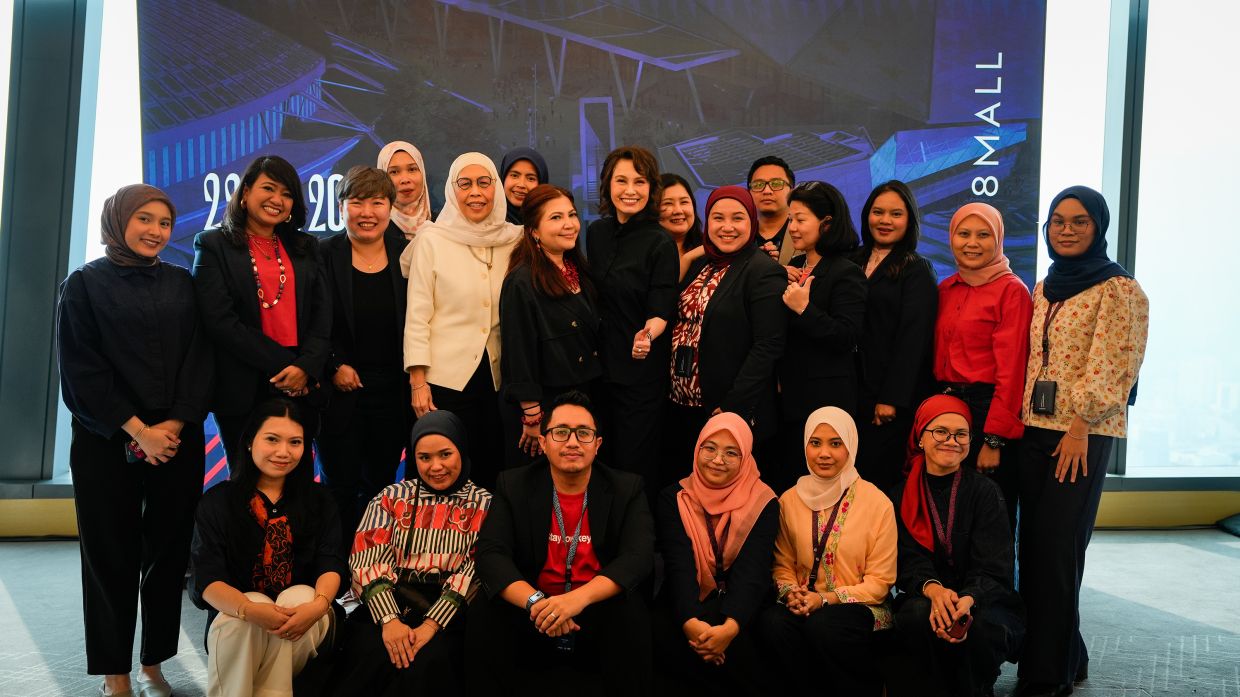
118 Mall has convened its first major gathering of retail partners, assembling more than 200 merchants from diverse sectors at an event held at Park Hyatt Kuala Lumpur. The occasion marked a significant milestone for the sprawling Merdeka 118 precinct development, which represents one of Kuala Lumpur's most ambitious mixed-use projects currently under construction. Through the gathering, PNB Merdeka Ventures Sdn Bhd orchestrated a comprehensive briefing on the mall's progress and strategic positioning ahead of its anticipated November 2026 launch, while simultaneously building momentum among the retail community that will anchor the facility.
The retailer convocation reflected broad participation across multiple merchandise categories and service verticals. Fashion retailers including adidas, ALDO, Converse, Foot Locker, Guess and Lacoste confirmed their participation, establishing a robust anchor for the apparel sector. The dining and grocery segment secured commitments from Village Grocer and Makanism Foodhall, positioning the mall to capture food-related consumer spending. Complementary retailers such as Best Denki, Benjamin Barker, CHAGEE Signature, BookXcess and Babyshop demonstrated the mall's multi-category appeal, while a dedicated Malaysian Artisan District section promises to feature homegrown brands alongside international names, offering visitors a distinctive blend of local craftsmanship and global retail offerings.
PNB Merdeka Ventures chief executive officer Datuk Ir. Ts. Izwan Ibrahim articulated the strategic differentiation of 118 Mall within the broader Merdeka 118 ecosystem. Rather than functioning as a standalone retail facility, the mall benefits from proximity to the Merdeka 118 tower complex, which incorporates luxury accommodation, office space, cultural attractions and heritage offerings. This integrated approach generates a uniquely diversified visitor profile encompassing hotel guests, corporate workers, international tourists and local shoppers, a heterogeneous demand base that traditional shopping malls typically struggle to capture. Ibrahim emphasised that this convergence of visitor typologies underpins the collaborative prosperity potential for retail partners, mitigating the risk that any single customer segment's weakness might severely impact overall foot traffic.
The seven-storey mall itself will house over 300 retail outlets distributed across fashion, food and beverage, lifestyle services and experiential attractions. Sue Wang, head of retail for the development, projected that the facility could attract approximately 22 million visitors during its inaugural operating year. This footfall estimate appears calibrated to the incremental traffic generated by the Merdeka 118 hotel tower and office complex, which together will concentrate thousands of daily workers and lodged guests in immediate proximity to the mall. The projection also accounts for Kuala Lumpur's visitor economy, particularly international tourism flows drawn to the precinct's heritage dimensions and landmark status.
The strategic positioning of 118 Mall as an integrated component of Merdeka 118 rather than as a discrete retail venue represents a meaningful departure from conventional shopping centre development in Malaysia. The precinct model attempts to create a self-reinforcing ecosystem where retail benefits from hospitality traffic, office workers provide midday and after-hours purchasing activity, and tourist attractions generate captive audiences with discretionary spending capacity. This approach mirrors successful mixed-use developments in regional markets, though execution remains critical for realising projected outcomes.
Retailers received detailed guidance regarding promotional opportunities and brand activation pathways available within the mall environment. The facility's digital display infrastructure and dedicated event spaces offer merchants tangible platforms for marketing initiatives, enabling curated campaigns that extend beyond traditional point-of-sale merchandising. Such infrastructure investments suggest developer commitment to facilitating retailer success rather than passive landlord arrangements, potentially incentivising merchant confidence and willingness to commit resources to premium space within the facility.
The November 2026 opening timeline positions 118 Mall within Malaysia's broader retail landscape evolution. The shopping centre arrives during a period of measured sector consolidation, where e-commerce competition and evolving consumer preferences have pressured traditional mall operators to emphasise experiential and convenience dimensions rather than volume-based retail models. 118 Mall's integrated positioning and anticipated visitor profile suggest accommodation of these changing market dynamics through architectural and operational design choices.
For Malaysian retailers and international brands seeking Southeast Asian presence, 118 Mall's opening provides meaningful distribution opportunity within a high-traffic, premium-positioned venue. The confirmation of participation by marquee international labels validates retailer confidence in the project's viability and positioning, while the inclusion of Malaysian Artisan District offerings acknowledges growing consumer appetite for locally-produced goods and cultural authenticity alongside global brand access.
The inaugural retailers' gathering served an organisational function beyond information dissemination, establishing community among participating merchants and creating collaborative momentum approaching the November 2026 opening. This relationship-building dimension may prove consequential for generating collective marketing efforts and operational coordination among retailers, potentially enhancing overall shopping experience quality and visitor satisfaction metrics. The success of 118 Mall ultimately depends not solely on architectural execution and location advantages, but on effective collaboration among retail partners in delivering compelling shopping environments and services that justify the precinct's significant capital investment and ambitious visitor projections.

