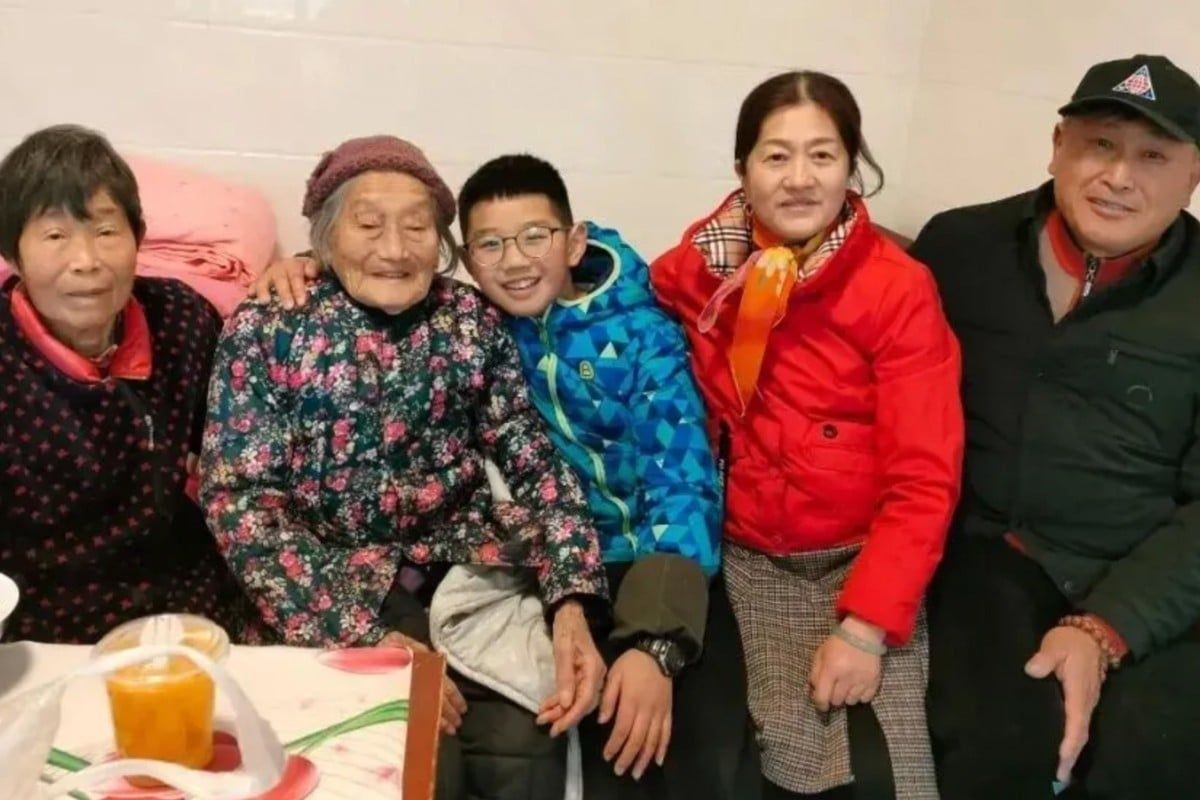
Wang Gaiying, a 111-year-old resident of Rugao in Jiangsu province, has become an unexpected social media sensation by demonstrating that longevity may stem not from expensive interventions or rigorous training regimens, but from the deliberate integration of mundane daily activities into a holistic lifestyle. Her case has reignited global fascination with how ordinary people achieve extraordinary lifespans, particularly in regions with documented concentrations of centenarians.
Rugao holds special significance in China's longevity landscape. The eastern city has earned recognition as one of the country's "longevity capitals," a designation rooted in demographic reality rather than marketing rhetoric. As of February this year, the municipality was home to 672 centenarians—a staggering concentration that draws researchers and health enthusiasts seeking to unlock the secrets of ageing well. This density far exceeds global norms, suggesting that environmental, genetic, and cultural factors converge in this particular region to produce measurably different health outcomes across generations.
Scientific inquiry into Rugao's phenomenon has pointed toward a compelling explanation. Researchers at the Chinese Academy of Sciences' Institute of Soil Science in Nanjing have identified the region's mineral-rich soil as a primary factor in residents' longevity. The geological composition produces crops abundant in trace elements essential for human health—compounds that accumulate in the bodies of those who consume locally grown produce over decades. This geological advantage represents a form of environmental determinism that money cannot easily replicate, explaining why migration to Rugao does not automatically extend the lifespans of newcomers in the same proportion.
Within this advantageous setting, Wang maintains her health through a deceptively simple philosophy: treating household labour as deliberate physical activity. Even in her early hundreds, she actively participated in field work, harvesting peanuts and watermelons alongside family members. Though her pace has slowed with age, she refuses to surrender to inactivity. Her daily routine includes light domestic tasks—wiping tables, folding clothes, tidying spaces—which she views not as burdensome obligations but as essential movement that maintains joint flexibility and cardiovascular function. When family members suggest she rest, Wang articulates a philosophy increasingly validated by gerontological research: that continuous, moderate physical engagement throughout the day yields superior health outcomes compared to sedentary periods interrupted by formal exercise.
Wang's dietary approach complements her active lifestyle through discipline and thoughtful variety rather than restriction. Her family deliberately alternates her staple foods, rotating between dumplings and steamed buns to prevent monotony and ensure diverse nutrient intake. Fish occupies a privileged position in her diet—not through accident but through deliberate preference, as she appreciates both its tender texture suited to aging teeth and its nutritional density. Her relationship with food emphasizes balance over indulgence; she consciously moderates portion sizes and avoids the trap of overeating that frequently accompanies advancing age. This measured approach stands in stark contrast to contemporary food cultures that equate abundance with wellbeing.
An unexpected detail emerged regarding Wang's former consumption of rice soaked in baijiu, the traditional Chinese liquor. This practice, once part of her routine, ceased approximately five years ago when family members intervened based on practical safety concerns—specifically, the intoxication risk that could precipitate dangerous falls. The discontinuation illustrates an important principle often overlooked in longevity discussions: that living exceptionally long requires not just individual discipline but also family vigilance and the willingness to modify cherished habits when circumstances change. Wang's acceptance of this adjustment suggests psychological flexibility that likely contributes to her mental resilience.
Beyond the physical dimensions of her longevity, Wang attributes her exceptional lifespan to psychological and social practices that have gained increasing recognition in longevity research. She maintains a personal discipline of performing one small act of kindness daily—whether offering genuine compliments to family members or sending brief greetings to elderly friends. This consistent orientation toward generosity and connection serves multiple functions simultaneously: it structures her days with purpose, maintains social bonds that research shows are crucial for longevity, and cultivates a psychological state of benevolence that likely reduces stress-related inflammation in her body.
Wang's emotional regulation strategy merits particular attention. She consciously refuses to carry frustrations into sleep, instead using rest as a reset mechanism that provides psychological distance from troubles. Her observed calm demeanour appears to reflect decades of practice in this emotional discipline. When she awakens after sleep, she frequently discovers that yesterday's grievances have diminished in perceived importance—a phenomenon that suggests sleep may serve a regulatory function beyond physical recovery. Her adherence to a disciplined sleep schedule of 7pm to 7am nightly, supplemented by one or two daytime naps, ensures she achieves the sleep quantity and consistency that contemporary sleep science increasingly identifies as foundational to cellular repair and cognitive preservation.
The five-generation household in which Wang resides provides essential context for understanding her sustained health and wellbeing. Unlike elderly individuals living in isolation, Wang maintains constant social engagement, regular exposure to younger people's perspectives, and daily opportunities for purposeful contribution to family life. This intergenerational living arrangement—increasingly rare in urbanized Asia yet still preserved in many rural communities—offers practical advantages beyond emotional satisfaction: family members can monitor her health, encourage her activity, and adjust her environment as her needs evolve. Her grandson, now 60 years old, bridges generational gaps and ensures she remains culturally engaged.
Wang's case challenges prevailing assumptions about what constitutes healthy ageing in the contemporary world. Her longevity does not result from expensive medical interventions, pharmaceutical regimens, or access to premium wellness facilities. Instead, her 111 years reflect the cumulative effect of small, sustainable choices repeated consistently across decades—choices available to ordinary people regardless of wealth. The mineral-rich soil of Rugao provided an initial environmental advantage, but Wang's own agency transformed that advantage through deliberate lifestyle practices: treating household labour as exercise, maintaining dietary discipline, cultivating kindness, managing emotions through sleep, and embedding herself within a multigenerational family structure that provides both practical support and psychological meaning.
For Malaysian and Southeast Asian audiences, Wang's longevity offers instructive parallels. Rural agricultural communities throughout the region similarly benefit from locally produced, nutrient-dense crops and intergenerational family structures that provide social safety nets and purposeful roles for elderly members. The principles Wang exemplifies—combining moderate daily physical activity with emotional regulation, dietary balance, and strong social connection—require no expensive infrastructure or pharmaceutical intervention. They depend instead on cultural commitment to practices that previous generations understood intuitively but that contemporary societies often abandon in pursuit of efficiency and modernity. Wang's success suggests that reclaiming these fundamental practices may offer more profound health benefits than pursuing trendy but ultimately superficial wellness interventions.
Observers on social media have responded to Wang's story with recognition of the complex interplay between genetics, environment, and personal choice that determines longevity outcomes. Some have noted that residents of Rugao appear to benefit from "strong longevity genes" enhanced by favourable environmental conditions and reinforced by deliberate lifestyle choices. This formulation acknowledges that exceptional lifespan rarely results from any single factor but rather from the fortunate convergence of multiple conditions, some inherited or environmental but many within individual control. Wang's example demonstrates that even those without Rugao's geological advantages can access the behavioural and psychological practices she employs, suggesting that her specific longevity secrets, while enhanced by regional factors, contain universally applicable wisdom about living well across the full span of human years.

